

Last Updated: November 5, 2026
Quick Summary
Natural back relief comes mainly from gentle movement, heat or cold, and sleep positioning, with some supplements as possible additions. Regular walking and mobility work have the strongest support for back relief, while most supplements lack trials specific to back pain. Check with a pharmacist before combining any supplement with prescription drugs.
- Exercise and physical therapy have broader support for chronic back pain than most supplements.
- Use a cold pack for 10 to 15 minutes in the first days after a sudden strain.
- Use a warm pack for 10 to 15 minutes for muscle tightness and stiffness.
- Start with two or three short walks a day of five to ten minutes each.
- Track your pain on a 0 to 10 scale and see a doctor if it does not improve in two to four weeks.
Table of Contents
- Why Look for Natural Alternatives to Pain Medication for Back Pain
- Natural Remedies for Back Pain and Inflammation
- How to Relieve Pain Without Medicine Through Movement
- Heat or Ice for Back Pain Relief: Which to Use and When
- Sleeping Positions for Back Pain and Knee Support
- Evidence, Safety and When to See a Doctor
- Building a Simple Back Relief Routine to Try This Week
- Frequently Asked Questions
Why Look for Natural Alternatives to Pain Medication for Back Pain
Back pain is one of the most common reasons adults seek care, and many people want options that do not depend only on medication. Back relief can come from a mix of approaches, including movement, heat and cold, sleep positioning, and some supplements.
This guide looks at the practical options, what the evidence does and does not show, and how to build a simple routine.
Treat this article as general information, not medical advice. If your pain is severe, persistent, or follows an injury, speak with a doctor before changing how you manage it.
Natural Remedies for Back Pain and Inflammation
Many people look at natural remedies for back pain and inflammation first, because they are widely available and easy to try. Consumer-health guidance commonly lists heat and ice, exercise, stretching, guided imagery, breathwork, and herbal remedies among at-home options Cleveland Clinic guide to natural pain relief.
The honest framing is that these options sit on a wide spectrum of evidence. A few, exercise, heat, and cold, have been studied enough that clinicians recommend them routinely.
Turmeric, Curcumin and Fish Oil
In a 2024 expert-opinion review published in the Journal of Pain Research, curcumin and fish oil each received 7 expert votes as recommended herbal remedies for pain management Journal of Pain Research expert panel on herbal pain remedies. That signals professional interest. It does not show that either product reduces back pain in a clinical trial.
Curcumin, the active compound in turmeric, is studied for its anti-inflammatory activity. Plain turmeric powder in food delivers relatively little curcumin, and many studied extracts pair curcumin with piperine (a black-pepper compound) or use a formulated version to improve absorption.
Both can cause stomach upset, and fish oil may affect blood clotting, so check with a pharmacist if you take blood thinners, have surgery scheduled, or take blood pressure medication. Curcumin can also interfere with some drugs and may irritate the stomach; it is not a good fit during pregnancy without clinician input.
Magnesium and Boswellia
Magnesium and boswellia are sometimes mentioned in the same kinds of reviews, though with less support than curcumin and fish oil. Magnesium is involved in muscle function, and boswellia is an herbal extract used for joint discomfort. Neither should be treated as a proven back-pain fix.
Magnesium comes in several forms, citrate, glycinate, oxide, and they differ in absorption and in side effects; oxide is the cheapest and the most likely to loosen the stool. Boswellia is often combined with other herbs in joint formulas, which makes it hard to know which ingredient is doing anything.
Topical Options Worth Knowing
Topical products are often overlooked in natural-remedy lists but deserve a place. Capsaicin cream, menthol gels, and arnica preparations are applied directly to the sore area and carry far less systemic risk than a pill because little reaches the bloodstream. The trade-off is that they can irritate skin, and capsaicin in particular causes a burning sensation that fades with repeated use. Do not apply heat over a topical rub, and keep them away from broken skin.
How to Trial a Supplement Sensibly
One sensible approach is to try one supplement at a time, at a labeled dose, and to keep a simple daily note of pain and any side effects. If nothing changes, stop, there is no benefit to stacking products indefinitely. If you take prescription medication, run the list past a pharmacist first, because interactions are the main real risk here.
The table below sums up the supplements the article discusses, what the evidence shows for each, and the main caution to keep in mind.
Option |
Evidence noted |
Key caution |
|---|---|---|
Curcumin |
Received 7 expert votes as a recommended herbal remedy |
Can irritate the stomach; may interfere with some drugs |
Fish oil |
Received 7 expert votes as a recommended herbal remedy |
May affect blood clotting; check if on blood thinners |
Magnesium |
Involved in muscle function; little back-pain-specific support |
Oxide form most likely to loosen the stool |
Boswellia |
Used for joint discomfort; not a proven back-pain fix |
Often combined with other herbs, so effects are hard to isolate |
Topical capsaicin, menthol, arnica |
Applied locally; far less systemic risk than pills |
Can irritate skin; do not apply heat over the rub |
How to Relieve Pain Without Medicine Through Movement
Movement is one of the most consistently recommended ways to reduce back pain without medication, and it is also one of the few natural approaches with real evidence behind it. Gentle activity keeps the spine mobile and can ease stiffness that builds from sitting or lying still.
The catch is that "movement" means different things depending on whether your pain is new or long-standing.
Stretching and Mobility
Stretching and mobility work help too. Try slow hip rotations, knee-to-chest stretches, and cat-cow movements for a few minutes each day. Keep the range comfortable rather than pushing into a stretch, and hold each position for a slow breath or two rather than bouncing.
knēNest Side Sleeper Alignment Knee Pillow – Patent Pending →
Watch out: stop any movement that sharpens pain, sends pain down the leg, or causes numbness or tingling, that pattern suggests the movement is irritating a nerve rather than loosening muscle.
A Practical Progression
A simple sequence most people can follow without equipment:
- Week 1: Two or three short walks a day (five to ten minutes each) plus five minutes of gentle mobility in the morning.
- Week 2: Lengthen one walk to 15-20 minutes and add a few bodyweight movements, sit-to-stand from a chair, glute bridges, and bird-dog, for two sets of five to eight reps.
- Week 3 onward: Add a little duration or a rep each session as tolerated, aiming for activity on most days of the week rather than one long session.
The key is consistency and progression. Start with short sessions, aim for regular activity across the week, and increase duration as tolerated. Sudden intense exercise after a long period of inactivity can aggravate back pain, so err on the side of too little rather than too much in the first week.
When Movement Alone Is Not Enough
If pain is not improving after two to four weeks of consistent gentle activity, or if it is getting worse, that is a signal to get assessed rather than to push harder. Seek care promptly for leg weakness, numbness in the groin or inner thighs, loss of bladder or bowel control, fever, or pain after a fall or accident. For most people, though, the combination of regular walking, a few mobility drills, and attention to sleep position does more for day-to-day comfort than any single remedy, and it is the part of a natural routine most worth protecting when life gets busy.
Heat or Ice for Back Pain Relief: Which to Use and When
Heat and cold are two of the simplest tools for back relief, and choosing between them depends on timing and the type of pain. Cold packs are often used in the first days after a sudden strain, and heat is more commonly used for muscle tightness and stiffness.
As a practical rule, apply a cold pack wrapped in a cloth for 10 to 15 minutes, and a warm pack for a similar period. Never place ice or heat directly on the skin, and avoid heat if you have circulation problems or reduced sensation.
Sleeping Positions for Back Pain and Knee Support
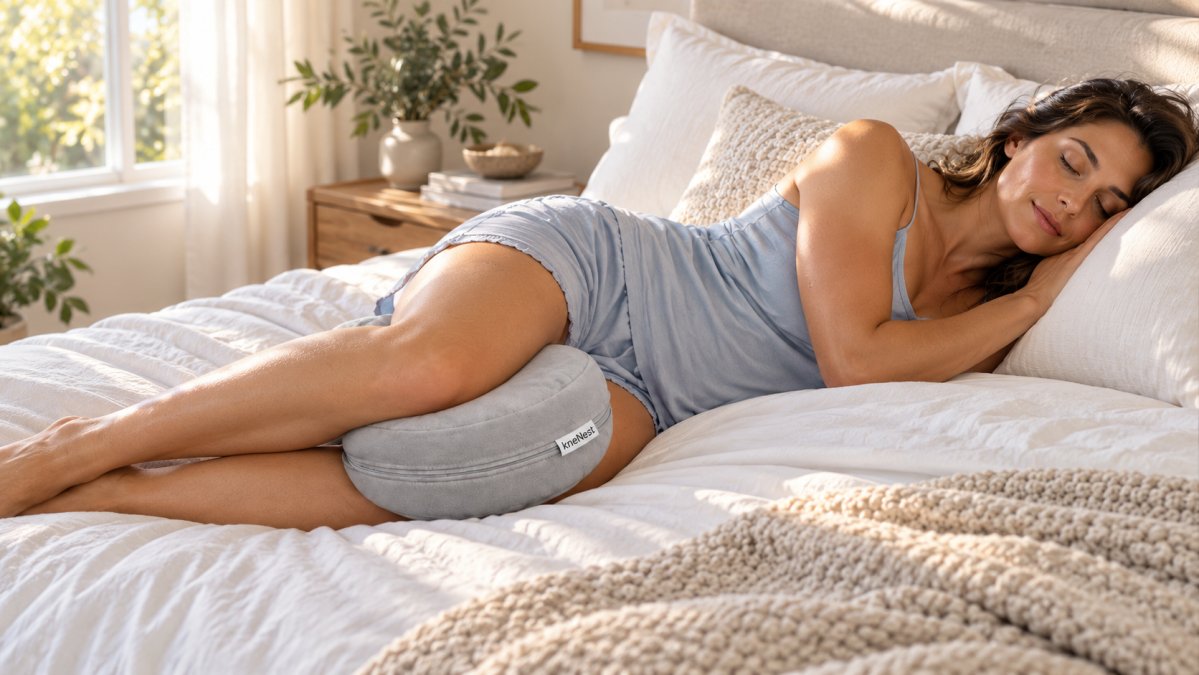
Sleep position has a direct effect on spinal alignment, and many side sleepers notice more discomfort in the lower back and hips at night. If hip discomfort wakes you, a step-by-step guide to relieving hip pain while sleeping walks through simple adjustments to try. When the top knee drops forward and rests on the bottom knee, the hips and lower spine can twist slightly. Learn why side sleepers benefit from knee support to see how keeping the knees apart helps. If your knees hurt during sleep, explore the likely causes before trying a fix.
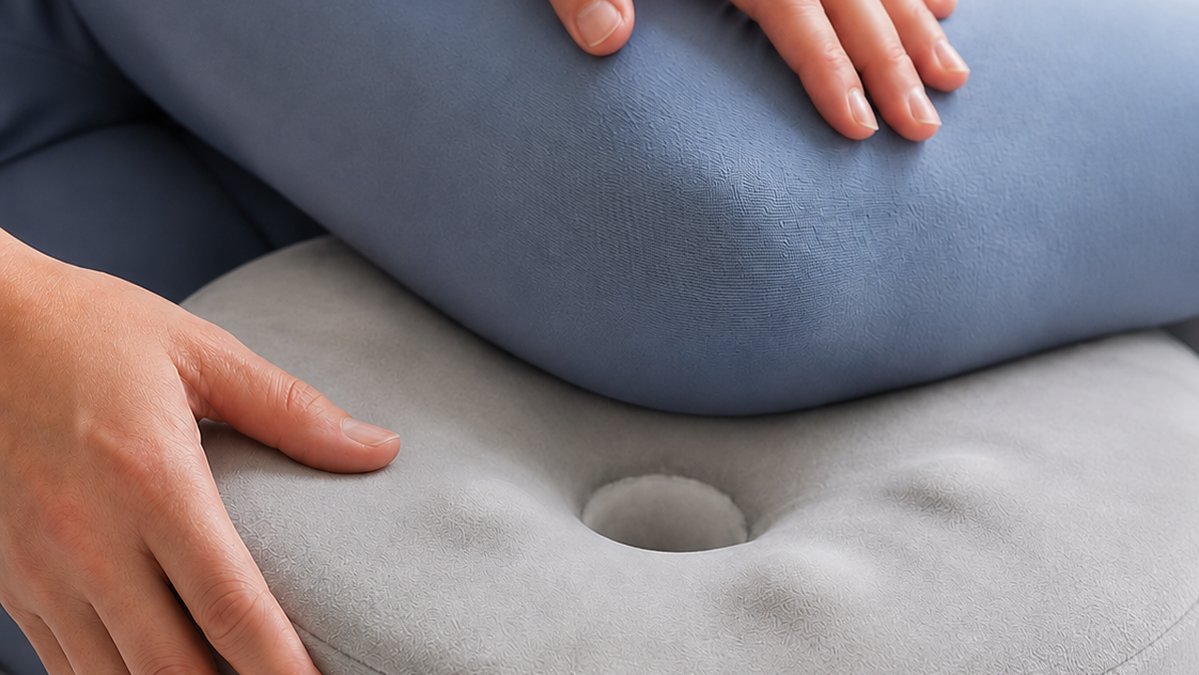
The knēNest Side Sleeper Alignment Knee Pillow is a compact, contoured cushion designed for side sleepers. Its patent-pending knee-docking shape gives both knees a supported resting place, which can reduce knee-on-knee pressure and support more comfortable positioning of the knees, hips, and spine. It does not treat sciatica or any medical condition.
For a complete setup, the knēNest Brisa Cooling Side Sleeper Alignment Pillow adds a breathable, cool-touch cover, and the knēNest Brisa + Orb Spine-to-Toe Alignment System extends support to the ankles. If sciatica is part of the picture, how to sleep with sciatica: the best positions for relief covers more positions in detail.

Evidence, Safety and When to See a Doctor
The strength of evidence differs across natural options. Integrating these evidence-based practices into a daily routine provides a structured approach to relieve chronic back pain through sustainable lifestyle modifications.
The natural pain relief options above are not risk-free. Supplements can interact with medications, including blood thinners and drugs for blood pressure or diabetes. Herbal products are not regulated like prescription medicines, so quality varies.
Building a Simple Back Relief Routine to Try This Week
A simple plan works better than trying everything at once. Pick two or three changes and give them a week.
- Day 1 to 2: Use a warm pack for 10 to 15 minutes each evening, and gentle stretching each morning.
- Day 3 to 4: Add a 15-minute walk each day at a comfortable pace.
- Day 5 to 7: Set up your sleep position with a knee pillow between the knees, and note how you feel each morning.
Track your pain on a 0 to 10 scale each day. If it is not improving after two to four weeks, or if it is getting worse, book an appointment with a doctor or physical therapist. A clinician can check whether medication or another treatment is a better fit for your situation.
Frequently Asked Questions
What is the best natural thing to take for back pain?
Research on natural options for back pain is limited, and the strongest signal so far comes from expert recommendations rather than large clinical trials. Some expert-opinion reviews have listed curcumin and fish oil among commonly recommended options for pain management. These are recommendations, not proof of back-pain outcomes. Supplements can interact with medication and are not automatically safe, so check with a pharmacist or doctor before starting any of them, especially if you take blood thinners or other regular medicines.
How can I make my back stop hurting without medicine?
Combine several low-risk approaches: keep moving gently, apply heat or ice, stretch within a comfortable range, and adjust how you sleep. The U.S. Department of Veterans Affairs lists exercise, mind-body techniques, acupuncture and spinal manipulation among non-drug approaches with evidence of benefit for chronic pain. Pain that persists, worsens or is accompanied by leg weakness, numbness or loss of bladder or bowel control needs prompt medical assessment rather than self-treatment.
Can a pillow between the knees help with back comfort while sleeping?
A pillow between the knees can help side sleepers keep the top knee from dropping forward and pulling the hips and lower back out of line. A knēNest Side Sleeper Alignment Knee Pillow is designed for this purpose, with a contoured, patent-pending knee-docking shape and memory foam that cushions knee-on-knee pressure. It supports a more comfortable position but does not treat sciatica or any other condition.
When should I seek medical care for back pain?
Seek medical care if back pain follows an injury, lasts beyond a few weeks without improving, or wakes you at night with severe discomfort. Urgent assessment is needed for numbness or weakness in the legs, pain with fever, unexplained weight loss, or any change in bladder or bowel control. A clinician can discuss nonopioid medication options, such as topical or oral NSAIDs and acetaminophen, alongside the natural approaches in this guide.
