

Table of Contents
- Why Side Sleepers Need Knee Support Between the Knees
- Benefits of Sleeping With a Pillow Between Your Knees
- How to Use a Knee Pillow for Better Sleep Position
- Knee Pillow vs. Regular Pillow vs. Leg Wedge
- Best Knee Pillow for Side Sleepers: What to Look For
- When Knee Support May Not Help and When to Seek Guidance
- Frequently Asked Questions
Last Updated: October 7, 2026
Why Side Sleepers Need Knee Support Between the Knees
Side sleeping is one of the most common sleep positions, yet many side sleepers wake with hip pain, lower-back stiffness, or a sense that their alignment is off, which is why side sleepers need knee support to maintain proper spinal positioning. Without proper support, your body shifts in ways that create strain.
This is where knee support becomes essential. A pillow placed between your knees while side sleeping helps maintain spinal alignment, reduces pressure on your hips, and prevents your upper leg from pulling your pelvis forward.
The benefits of sleeping with a pillow between your knees extend beyond comfort: proper knee support can reduce tossing and turning, help you wake without stiffness, and support a more natural sleeping position. Below, we'll cover how knee support works, what makes it different from other options, and how to choose the right pillow for your body.
How a Pillow Between the Knees Supports Side Sleeping
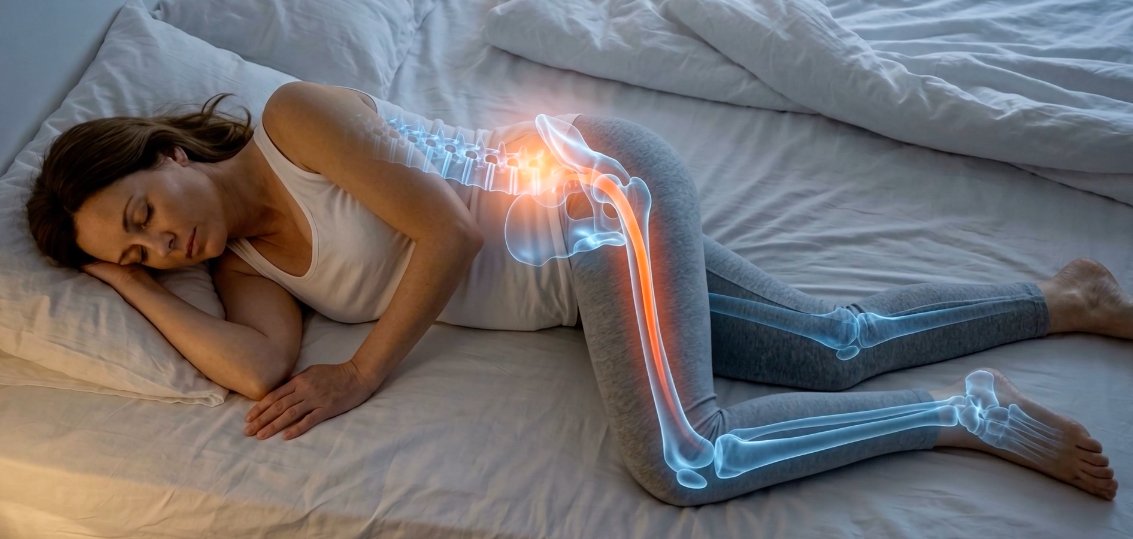
When you lie on your side without support, your top leg falls forward and inward, pulling your pelvis out of alignment with your spine. Your lower back compensates by arching or twisting, and over eight hours that accumulated strain leads to morning stiffness and discomfort.
A pillow between your knees prevents this cascade by keeping your knees at a comfortable distance apart, which stabilizes your pelvis. With your pelvis stable, your spine can maintain a more neutral curve and your hip muscles relax instead of working overtime.
The key is the pillow's shape and height. A standard pillow often shifts or compresses, while a contoured knee pillow designed for this purpose settles your knees naturally and maintains its shape through the night.
Hip, Pelvis, and Spinal Alignment During Side Sleep
Your spine is a chain of bones that needs to stay relatively straight from neck to lower back when you lie on your side. Any rotation or twisting creates tension in the muscles and ligaments that support it.
Your pelvis is the foundation: when it tilts or rotates, everything above it compensates. A pillow between your knees keeps your pelvis level and stable, so your lower back relaxes, your mid-back settles, and your neck sits in a more neutral position.
Hip alignment matters equally. Without knee support, your hip rotates internally as your top leg falls forward, creating pressure on the joint and straining the surrounding muscles. Proper knee support limits that rotation and distributes pressure more evenly.
Benefits of Sleeping With a Pillow Between Your Knees
A properly positioned knee pillow improves how you sleep and how you feel when you wake, and these benefits build over time as your body adjusts to better alignment.
Reducing Lower-Back Discomfort and Hip Pressure
Lower-back discomfort is one of the most common complaints among side sleepers. It typically stems from the arching or twisting we described earlier. When your pelvis tilts forward, your lower back muscles contract to hold you in place. By morning, they're fatigued and tight.
Hip pressure follows a similar pattern: the outside of your hip bears your body weight all night, and without support your leg weight pulls it into an awkward angle. A pillow between your knees redistributes that pressure and reduces strain on the hip joint.
Preventing the Upper Leg From Pulling Forward
Your upper leg naturally falls forward when you lie on your side, since gravity pulls it down and forward and hip flexors are often tight, especially in people who sit for long hours. A pillow between your knees acts as a physical barrier against that forward drift.
When your upper leg stays back instead of pulling forward, your hip stays more stable, your pelvis rotates less, and your lower back doesn't arch to compensate, so less strain is distributed across your entire lower body.
This prevention is passive: the pillow does the work for you all night, even as you shift positions slightly during sleep.
Limiting Hip Rotation and Keeping Knees Separated
Hip rotation happens naturally in side sleeping. Your top hip wants to rotate forward and inward. A pillow between your knees limits that rotation by keeping your knees separated and stable.
Separated knees also prevent knee-on-knee pressure, a common source of soreness by morning for side sleepers. A pillow keeps your knees apart, eliminating that contact entirely.
The separation also helps your leg muscles relax: when your knees touch or overlap, muscles in your outer thigh and hip work to stabilize the position, so separation means less muscle tension and fewer wake-ups due to discomfort.
How to Use a Knee Pillow for Better Sleep Position
Using a knee pillow correctly makes all the difference, since improper positioning reduces its effectiveness. Here's how to get the most from your support.
Positioning Your Knees in the Contoured Cradle
Start by lying on your side in your normal sleeping position, with your bottom leg relatively straight and slightly bent at the knee and your top leg bent at the hip and knee, ready to rest on the pillow.
Place the knee pillow between your knees so both settle into the contoured shape. It should feel like it's cradling your knees, not pushing them apart, with your knees roughly hip-width apart.
Adjust the pillow's height so your knees rest comfortably without tilting your pelvis: too high pushes your top leg up and tilts the pelvis, too low lets your leg fall too far forward.
Adjusting for Your Body and Sleep Habits
Your body may need a few nights to adjust to knee support.
If you shift positions during the night, your pillow may move, and that's normal. You don't need to reposition it perfectly every time; the contoured shape helps it stay in place better than a standard pillow, and over time your body learns where the support should be.
knēNest Side Sleeper Alignment Pillow – Patent Pending →
Some sleepers prefer a slightly firmer pillow, others softer, depending on body weight, hip width, and personal preference. Too soft compresses and loses shape; too firm may feel uncomfortable. The goal is support without pressure.
Knee Pillow vs. Regular Pillow vs. Leg Wedge
Three main options exist for knee and leg support while side sleeping. Each has different strengths.
A regular pillow between the knees is the most accessible option, but standard pillows compress quickly, shift easily, and provide inconsistent support, so they fall short for sustained comfort.
A knee pillow is designed specifically for this purpose: smaller and more contoured than a regular pillow, its shape keeps your knees in the right position and maintains support throughout the night. A quality knee pillow resists compression and shifting and is portable enough to travel with.
A leg wedge is larger and extends from knee to ankle, supporting your entire leg rather than just the knee.
For most side sleepers seeking everyday comfort and alignment, a knee pillow offers the best balance of support, portability, and ease of use.
Support Type |
Best For |
Durability |
Portability |
|---|---|---|---|
Regular Pillow |
Budget-conscious, occasional use |
Low, compresses quickly |
Easy |
Knee Pillow |
Daily side sleeping, travel |
High, maintains shape |
Very easy |
Leg Wedge |
Post-surgery, full-leg support |
High, firm structure |
Moderate |
Best Knee Pillow for Side Sleepers: What to Look For
Choosing the right knee pillow requires understanding which features matter most.
Pillow Height, Firmness, and Shape Considerations
Height is critical: your pillow should lift your top knee to roughly hip height when you're lying on your side, which varies by body size. The right height keeps your pelvis level without tilting.
Firmness determines how well the pillow maintains its shape: too soft compresses under your leg weight and loses support by mid-sleep, while too firm may create pressure points. Look for high-density memory foam that resists compression while still cushioning.
Shape determines how your knees settle: a contoured, hourglass-shaped design cradles your knees naturally, preventing them from rolling inward or outward and keeping them separated without muscular effort.
The knēNest Side Sleeper Alignment Pillow features a patent-pending contoured design that addresses these factors. Its hourglass shape cradles both knees, keeping them at the right distance apart. The high-density memory foam resists compression through the night.

Materials and Durability for Long-Term Support
Memory foam is the standard material for knee pillows because it responds to your body's heat and shape. High-density memory foam provides better support and durability than lower-density alternatives, resisting compression and maintaining its contour over years of use.
Hypoallergenic materials matter if you have sensitivities, so look for pillows made without harsh chemicals or synthetic odors, plus a removable, washable cover for easy cleaning.
Durability determines how long your pillow lasts: a quality knee pillow should maintain its support for several years with normal use, while cheaper options may flatten within months.
The knēNest pillow is crafted from hypoallergenic, chemical-free high-density memory foam. It includes a removable, washable cover for easy care.
When Knee Support May Not Help and When to Seek Guidance
Knee support works for most side sleepers, but it's not a universal solution. Certain situations call for different approaches or professional guidance.
If your discomfort stems from an injury, past surgery, or a diagnosed condition, consult your healthcare provider before relying on a knee pillow. A pillow can support recovery but cannot replace medical treatment.
Knee support also won't address sleep issues caused by factors outside of alignment. If your discomfort is related to inflammation, muscle weakness, or other underlying causes, a pillow alone won't resolve it.
Side sleeping is a healthy, natural position for most people, and adding proper knee support makes it more comfortable and restorative.
The knēNest Side Sleeper Alignment Pillow is designed specifically for this purpose, with a patent-pending contoured shape and high-density memory foam that supports all night long. Try it risk-free with our 60-night comfort trial.
Frequently Asked Questions
Should side sleepers put a pillow between their knees?
Yes. A pillow between the knees helps side sleepers maintain spinal alignment, reduce pressure on the hips, and prevent the upper leg from pulling the spine out of alignment. It keeps the knees separated and limits hip rotation, which reduces strain on the lower back and hips. Many side sleepers find this support reduces discomfort and improves sleep quality. Your body may need time to adjust to the new position, so consistent use helps.
What are the main benefits of sleeping with a pillow between your knees?
The primary benefits include reduced lower-back discomfort, decreased hip and knee pressure, better spinal alignment, and improved sleep stability. A pillow between your knees prevents the upper leg from pulling forward and limits excessive hip rotation, which can strain your lower back. Many side sleepers also experience less tossing and turning, allowing for deeper, more restorative sleep.
How do I use a knee pillow correctly for side sleeping?
Position both knees in the contoured cradle of the pillow, with the pillow sitting between your knees at roughly hip height. Your knees should rest naturally without forcing them together. Your spine, hips, and legs should form a straighter line from head to toe. Start by sleeping on your side with the pillow in place for several nights to allow your body to adjust. If you change positions during the night, gently reposition the pillow when you return to your side.
What should side sleepers look for in the best knee pillow?
Look for a contoured shape that cradles both knees without requiring a tight strap, supportive memory foam that maintains its shape throughout the night, and breathable materials with airflow channels to prevent heat buildup. Choose a height and firmness that feel comfortable for your body—too high can strain your hip, too low may not provide adequate support. A removable, washable cover is practical for everyday use. Consider whether you prefer a cooler feel or standard memory foam based on your sleep temperature.