

Table of Contents
- Why Portable Sleep Support Matters When Traveling
- Best Travel Pillow for Long Flights: What to Look For
- Travel Pillow for Side Sleepers: Maintaining Alignment in the Air
- How to Sleep on a Plane: Positioning and Comfort Strategies
- Building a Portable Sleep Kit for Travel
- Common Mistakes That Disrupt Sleep While Traveling
- Portable Sleep Support Across Different Travel Settings
- Frequently Asked Questions
Last Updated: October 17, 2026
Why Portable Sleep Support Matters When Traveling
Travel disrupts everything about sleep: time zones shift, your bed changes nightly, and the upright airplane seat becomes your bedroom. Most travelers sleep poorly and wake stiff and exhausted. Portable sleep support for travel addresses this by maintaining the spinal alignment your body needs, even when your surroundings don't cooperate.
The problem isn't just discomfort, it's alignment. Sleeping in unfamiliar positions without proper support strains your neck, spine, and knees. Side sleepers face particular challenges: without something between the knees, the top leg pulls your spine out of neutral alignment, your hips rotate, and your lower back compensates.
Whether you're on a 12-hour flight, a road trip, or in a hotel bed, the right support maintains the alignment you'd have at home. At knēNest®, we've designed our portable solutions specifically for this.
Best Travel Pillow for Long Flights: What to Look For
Long flights demand specific features from a travel pillow: you're upright for hours, your head needs support that doesn't collapse, and the pillow must travel without taking up half your carry-on.
The best travel pillows share three qualities: wraparound support that prevents your head from rolling, breathable materials that don't trap heat against your neck, and a design that stays put rather than slipping down your shoulder.
The knēNest airNest Breathable Travel Neck Pillow with 360° Overlap Support delivers on all fronts. Its wraparound design supports from multiple angles, while the integrated AirLoop airflow design releases heat for cooler comfort. It's designed specifically for the positioning challenges of airplane seats. The 360° overlap reduces unsupported gaps around the neck, and you adjust the overlap to find the fit and support that feel most comfortable for you.

What most guides miss: a travel pillow's real job isn't luxury, it's preventing your head from jerking awake every time it droops. The knēNest airNest maintains consistent support throughout long flights.
Travel Pillow for Side Sleepers: Maintaining Alignment in the Air
Side sleepers face a unique challenge on planes: their natural position requires knee separation to maintain spinal alignment, but airplane seats don't accommodate it. Without support, the top leg pulls the spine out of neutral, and you wake with hip and lower-back discomfort.
A travel pillow for side sleepers needs to do two things: support your neck in a side-sleeping position and, ideally, provide between-knee support if space allows. The knēNest airNest addresses the neck component with its 360° wraparound design, which supports side-sleeping posture better than standard U-shaped pillows, and its adjustable overlap lets you customize the angle.
For complete portable sleep support for travel as a side sleeper, pair a neck pillow with a compact between-knee cushion. Together they maintain spinal alignment, neck support from the pillow, knee separation from the cushion, even in a narrow airplane seat.
How to Sleep on a Plane: Positioning and Comfort Strategies
Sleeping upright on a plane is about geometry, not willpower. The seat, headrest, and your posture create a set of angles, and small changes determine whether you drift off or spend the flight jerking awake. Most travelers fail because they accept whatever position the seat creates rather than actively supporting the position their body needs.
Start with the seat recline, but treat it as a range, not a switch. Recline just enough that your head isn't hanging forward, typically 15-20 degrees. Too much and you slide forward, pushing your chin toward your chest; too little and your head has nothing to rest against.
Position the pillow to support slight flexion, not hyperextension. Place a neck pillow so your chin is slightly down rather than thrown back; hyperextension is a common reason travelers wake with a stiff neck.
Match your body to the seat, not the seat to your body. Taller travelers often find headrest wings sit too low and push the head forward; a pillow filling the gap behind the neck helps. Petite travelers often find the opposite, the pillow is too bulky. Adjusting the overlap or removing excess fill is the practical fix.
For side-leaning sleepers, turn the shoulders first. Rotate your torso slightly toward the window or aisle so your shoulder blade rests against the seat back rather than being pinned flat. This opens the chest and gives the neck pillow a stable surface. If you have room, place a compact cushion between your knees to keep the hips from rotating.
Block light and sound as a system, not as an afterthought. Cabin lights, seatback screens, and aisle traffic all signal wakefulness. A contoured sleep mask with recessed eye areas, like the knēNest Light Blocking 3D Sleep Mask, blocks ambient light without pressing on the eyelids.

A note on comfort versus medical advice. These positioning strategies are about comfort and alignment during travel, not treatment. If you have an existing neck or back condition, talk to a clinician about what positions are appropriate for you before relying on any travel pillow.
The takeaway: the best plane-sleep setup is the one you can reproduce in thirty seconds, in a narrow seat, with the lights on. Practice the recline, pillow angle, and shoulder turn at home so the sequence is automatic when you're tired.
Building a Portable Sleep Kit for Travel
Portable sleep support for travel works best as a system, not a single product. The right combination of lightweight, packable items takes up minimal space while addressing multiple sleep challenges.
Your core kit: a neck pillow for upright sleeping, a sleep mask for light blocking, and, for side sleepers, a compact between-knee support. The neck pillow prevents your head from jerking as you drift off; the sleep mask blocks cabin lights so your body recognizes it's time to sleep; the between-knee support maintains spinal alignment on long journeys.
knēNest airNest Breathable Travel Neck Pillow with 360° Overlap Support →
Weight and packability determine whether you'll actually use these items. The knēNest airNest travels light. The knēNest Light Blocking 3D Sleep Mask fits in any bag. Together, they add minimal bulk to your carry-on while addressing the primary barriers to sleep during travel.
Consider your travel duration. For flights under four hours, a neck pillow alone may suffice. For overnight flights or multi-day road trips, add the sleep mask. For trips with multiple hotel beds, a portable between-knee support maintains the alignment you've established at home, reducing the adjustment period in each new bed.
Common Mistakes That Disrupt Sleep While Traveling
Most travelers sabotage their own sleep through preventable errors. Recognizing them is the first step to better rest.
The biggest mistake: choosing a pillow based on luxury rather than function. The knēNest airNest prioritizes support structure, the 360° overlap maintains its shape throughout long flights because it's engineered for the job.
Another common error is not blocking light. A proper sleep mask like the knēNest 3D Sleep Mask, with its contoured, recessed design, blocks light without pressing on your eyelids.
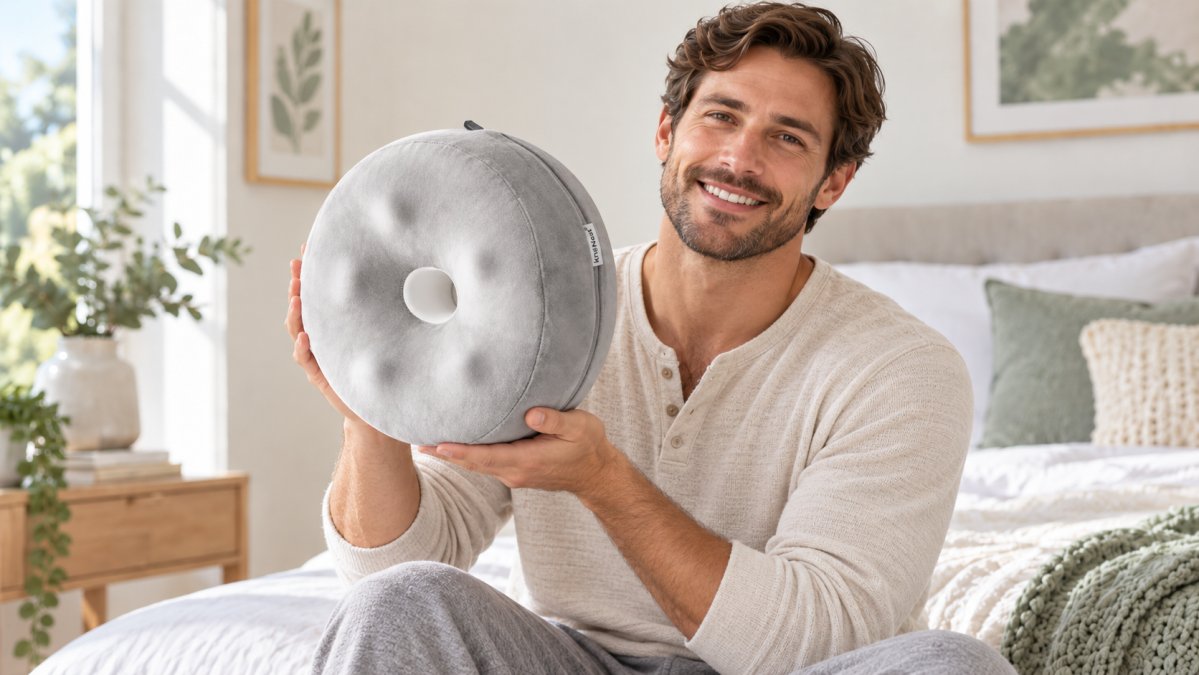
Side sleepers often neglect knee support during travel. They pack a neck pillow but forget that their spine needs alignment from neck to hips. Without between-knee support, the top leg rotates your pelvis and you wake with lower-back discomfort.
Finally, many travelers pack items they won't use because they're too bulky or heavy. Portable sleep support only works if you actually carry it, which is why the knēNest airNest's lightweight design matters.
Portable Sleep Support Across Different Travel Settings
Most travel-sleep guides treat the long-haul flight as the default and everything else as an afterthought. In practice, the support that works on a plane isn't always what works on a train, in a car, or in a hotel bed. The useful question isn't "what is the best travel pillow" but "what does this setting actually demand?"
Airplanes: upright, narrow, and light-polluted. The plane is the hardest setting because you can't change your posture much and the environment fights sleep. Priorities: upright neck support that prevents the head from rolling, light blocking, and something compact enough for the seat pocket.
Trains: more recline, more vibration, more light changes. Train seats often recline further than plane seats, which helps the neck but introduces vibration and lateral sway. A pillow that stays put matters more than one that's ultra-soft, and light blocking matters more because train windows let in constantly changing daylight.
Buses: limited recline, high motion, and shared light. Bus travel combines limited recline with constant motion. Neck support that prevents the head from bobbing is the priority, and a sleep mask blocks overhead lights and passenger screens.
Cars: the passenger's advantage. As a passenger, you can recline further than on a plane or bus. Neck support remains useful for hours when you're awake but tired, and a compact between-knee cushion becomes more valuable if you sleep during a long stop. Never use sleep support that interferes with visibility or head restraint positioning while driving.
Hotel beds and destinations: consistency beats novelty. The bed provides support, but it's unfamiliar, a different mattress, pillow, and room. The goal is to reproduce the alignment habits you have at home so your body isn't adjusting to a foreign sleep position every night. A side sleeper who uses between-knee support at home should travel with a compact version.
A simple decision rule. If you sleep upright or semi-upright, prioritize neck support and light blocking. If you sleep on your side, prioritize knee separation and a pillow that holds its shape. If you sleep in multiple settings on one trip, pack the smallest version of each you'll actually carry, the best support is the one that makes it out of the bag.
What this means for packing. Rather than one universal kit, build a small core (neck pillow, sleep mask) and add setting-specific items only when the trip calls for them. That keeps weight and bulk down while still addressing the setting you're actually in.
Frequently Asked Questions
What should I pack in a portable sleep kit for travel?
A portable sleep kit typically includes a travel neck pillow for head and neck support, a lightweight sleep mask to block ambient light, and a compact cushion for knee or lumbar support. The knēNest airNest Breathable Travel Neck Pillow offers 360° overlap support with an AirLoop design for cooler comfort on flights and road trips. Add a sleep mask like the knēNest 3D Sleep Mask to reduce pressure on your eyelids while blocking light. Keep items packable and lightweight—aim for pieces that compress or fold to fit in a carry-on or personal bag.
How can side sleepers stay comfortable on a long flight?
Side sleepers benefit from neck support that prevents the head from tilting sideways and a compact cushion to place between the knees, maintaining spinal alignment even in a cramped seat. Position a travel pillow to support your neck from multiple angles, and use a portable cushion to keep your knees separated and reduce pressure on your hips. Adjust your seat recline gradually and shift position every 30-45 minutes. A breathable travel pillow with airflow channels helps prevent heat buildup.
Is there a travel pillow that actually works?
Travel pillows work best when they provide consistent neck support without gaps and are made from materials that retain their shape. Look for designs with wraparound support, breathable fabrics, and ergonomic contouring. The knēNest airNest features 360° overlap support and an AirLoop design that releases heat for cooler comfort. Success depends on fit—adjust the overlap to match your neck width and sleeping position. Portable sleep support is most effective when combined with proper positioning, regular position changes, and light-blocking to signal your body to rest.
How can I sleep more comfortably while traveling?
Comfort while traveling depends on neck support, light blocking, body alignment, and environmental control. Use a travel pillow with ergonomic design to support your head and neck from multiple angles. Block ambient light with a sleep mask to help your body recognize rest time. Maintain spinal alignment by placing a compact cushion between your knees if you sleep on your side. Keep your travel environment cool. Bring familiar comfort items, stay hydrated, and move periodically to reduce stiffness and improve circulation.