

Last Updated: November 21, 2026
Quick Summary
A knee pillow stays in place when it fits correctly and you can relax your legs completely instead of gripping it. Choose a contoured shape that cradles the knees, use a textured cover for grip, and check that the height fills the gap between your knees.
- Needing to squeeze your legs to hold the pillow means the height or fit is wrong.
- A smooth silky cover slides against sheets, so switch to a textured or brushed cover.
- A strap is a retention tool, not a fit tool, and cannot fix a wrong-height pillow.
- You can sleep with a knee pillow all night, and there is no set time limit.
- Wash the cover regularly and keep the foam dry so the pillow holds its shape and grip.
Table of Contents
- Why a Knee Pillow Slips and What Actually Holds It
- How to Position a Knee Pillow for Side Sleeping
- When Your Knee Pillow Keeps Sliding Out: Fixes That Work
- Knee Pillow With Strap vs Without: What to Know
- How Long to Sleep With a Knee Pillow
- Caring for Your Pillow So It Keeps Its Grip and Shape
- Find Your Best-Fitting Knee Pillow at knēNest®
- Frequently Asked Questions
Why a Knee Pillow Slips and What Actually Holds It
A knee pillow slips because your legs move while you sleep, and a pillow that only sits loosely between the knees has nothing to hold it there.
Here is the counterintuitive part. Many sleepers assume they need to grip the pillow to keep it in place. The opposite is true.
That changes how you shop. You are not looking for the firmest block you can clamp between your knees.
The Fit Check That Prevents Most Slipping
Run this check before you blame the pillow:
- Lie on your side with knees slightly bent. Slide the pillow between them.
- Let your legs go heavy. If you have to squeeze to keep it there, the pillow is too thin or too thick.
- Check your hips. They should feel level, not rolled forward or back.
- Check your spine. A straight line from hips to shoulders is the goal.
Hip width alone is a poor way to pick a height. Body proportions and how far you sink into your mattress matter as well.
If you want a simple way to judge whether your current pillow is doing its job, this guide on how to tell if a knee pillow actually works for you walks through the signs to watch for.
How to Position a Knee Pillow for Side Sleeping
Place the knee pillow between your knees with your legs slightly bent, so the cushion fills the gap from mid-thigh to upper calf. Your top knee should rest on the pillow without you holding it.
Follow these steps:
- Lie on your side and bend both knees a little, roughly a comfortable angle.
- Set the pillow between the knees, closer to the upper thigh than the ankle.
- Let the top leg settle onto the cushion. Do not clamp down.
- Slide your bottom arm under your pillow and check that your shoulders stack over your hips.
- Stay still for a minute and notice any tension in your legs. If you feel it, adjust the pillow's position or thickness.
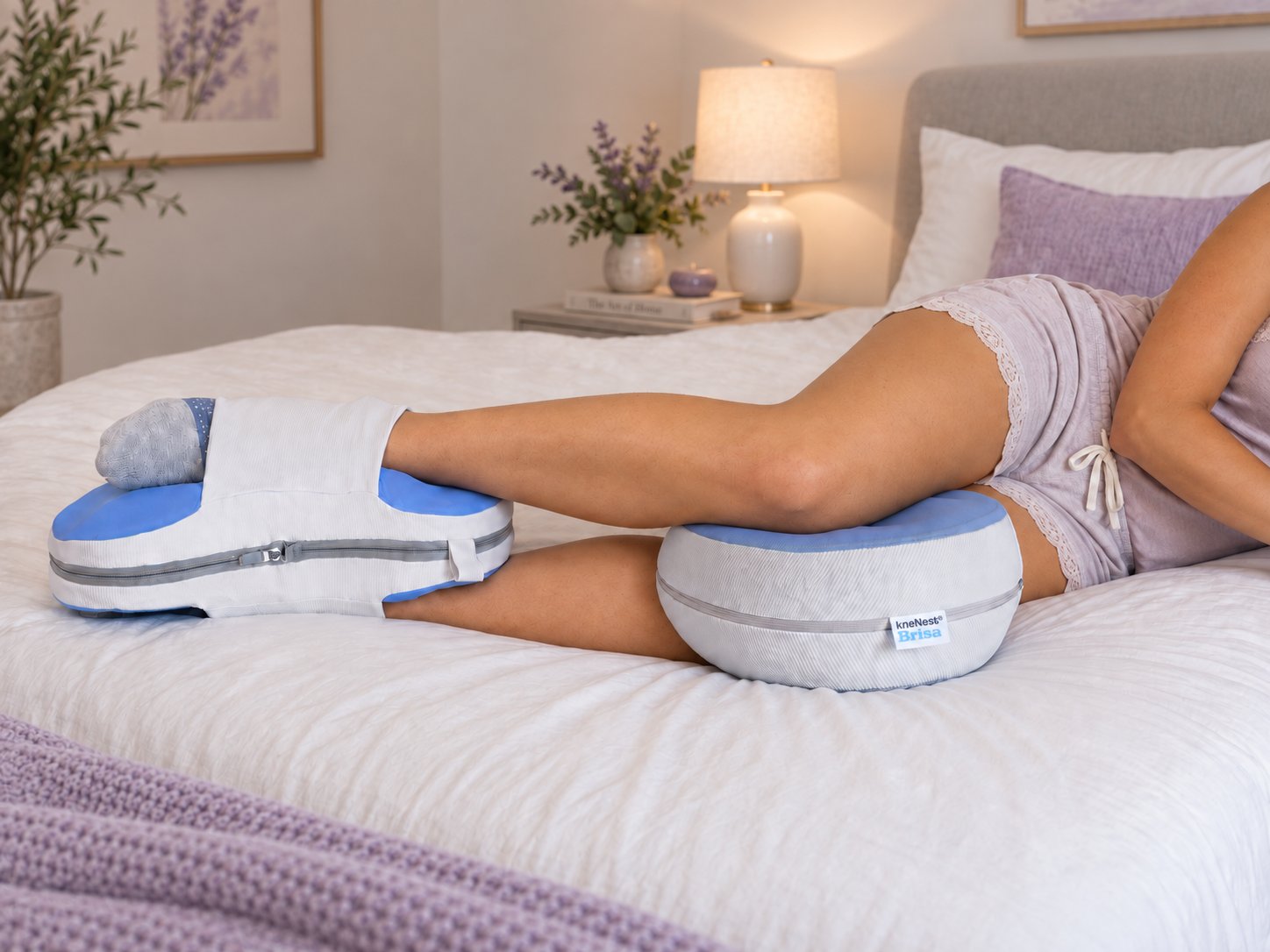
The goal is neutral hips and a gentle knee separation that takes pressure off the lower back. If you want a fuller walkthrough of placement, this guide on how to use a knee pillow correctly covers the details step by step.
When Your Knee Pillow Keeps Sliding Out: Fixes That Work
A knee pillow that keeps sliding out is usually telling you one of three things: the surface is too slippery, the fit is wrong for your body, or the shape does not match how you move at night. Work through the fixes below in order, cheapest first, and stop when the pillow stays put with a relaxed leg.
- Check the cover first. A smooth, silky cover slides against cotton or linen sheets. A textured or brushed cover creates friction and grips better. If your pillow has a removable cover, try a brushed replacement before changing anything else.
- Reduce the gap between your knees. If the pillow is too thin, your knees close together and push it out. A thicker or contoured pillow fills the space so your legs rest instead of squeeze.
- Try sleepwear with more friction. Smooth synthetic pajama legs let the pillow travel. Cotton, flannel, or a textured knit gives the pillow something to catch on.
- Reposition before you fall asleep. Set the pillow slightly forward of where you want it so it has room to settle back into the gap, not out of it.
- Look at your mattress. A very soft surface lets your hips sink, which changes the gap between your knees and shifts the pillow. A firmer surface keeps the gap more consistent through the night.
Troubleshooting by Sleep Movement and Pillow Shape
The more useful question is what kind of mover you are and what shape you are sleeping with.
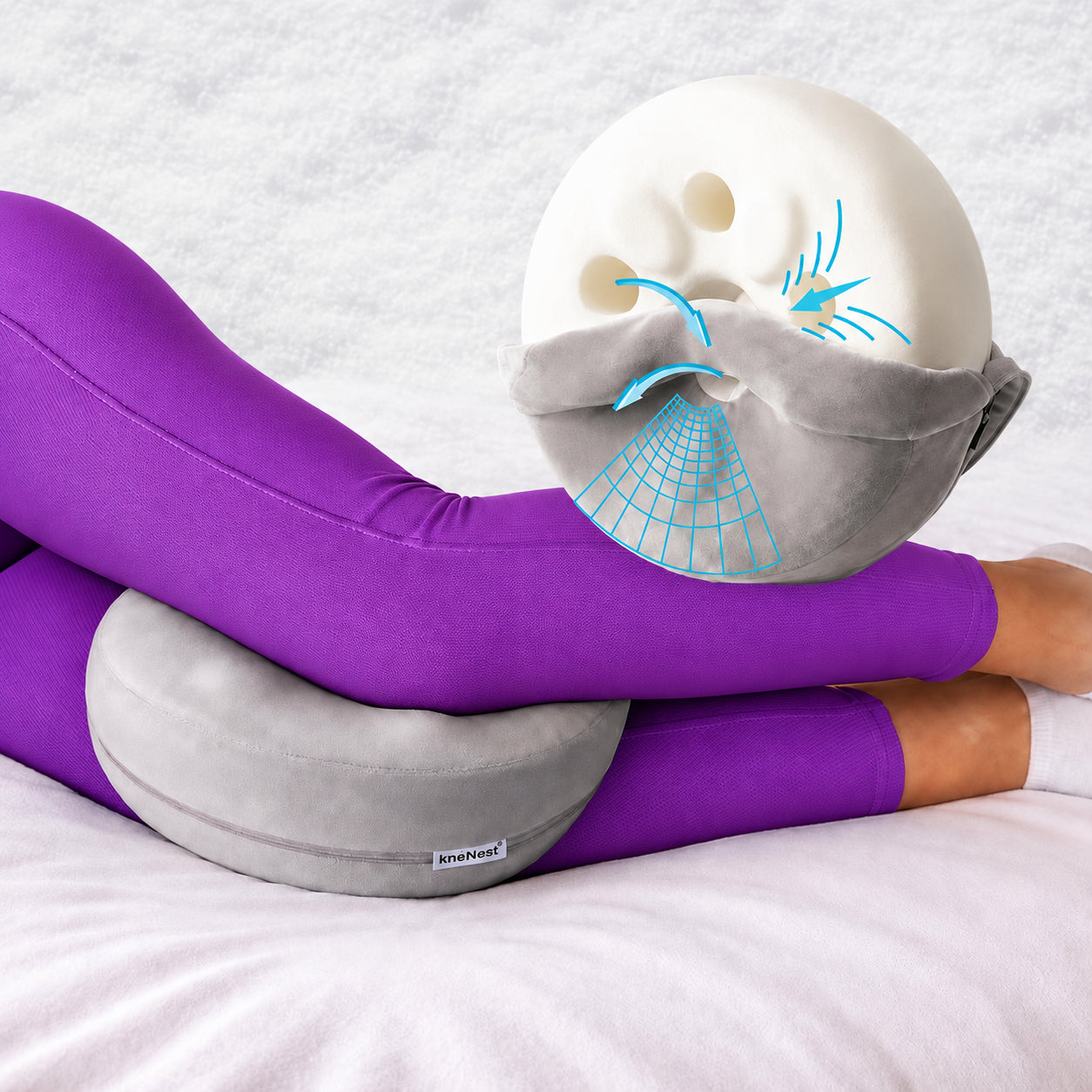
If you are a restless sleeper who changes sides several times a night: a flat pillow will not survive. That is the thinking behind the patent-pending knee-docking shape on the knēNest Side Sleeper Alignment Knee Pillow, which is designed to let both knees settle into a cradle without a tight leg strap.
If you are a still sleeper who wakes up with the pillow on the floor: the problem is usually fit, not movement.
If you use a contoured pillow: it should stay with minimal adjustment.
Watch out: adding a strap to a pillow that is the wrong height does not fix slipping.
A Quick Fit Guide for Body Size and Leg Proportions
Pillow height is not just about hip width. Body proportions and how far you sink into your mattress matter just as much. A soft mattress lets your hips drop, which changes the gap between your knees.
- Narrow hips or a firm mattress: a thinner contoured pillow usually fills the gap without lifting the top knee too high.
- Wider hips or a soft mattress: a thicker or more deeply contoured pillow keeps the knees separated without forcing you to squeeze.
- Long legs: a pillow that spans from mid-thigh to upper calf stays in place better than a short pillow that only touches the knees.
- Short legs: a compact pillow is easier to keep centered; an oversized one tends to rotate out from under the top knee.
If you are between sizes, choose the shape that lets you relax completely rather than the one that feels tightest. A pillow you have to grip is a pillow that will slide the moment you fall asleep.
Knee Pillow With Strap vs Without: What to Know
A knee pillow with a strap stays attached to one leg, which can help if you move a lot.
| Feature | With Strap | Without Strap |
|---|---|---|
| Stays attached during movement | Yes, to one leg | Relies on shape and grip |
| Risk of over-tightening | Higher | Lower |
| Easy to reposition | Slower | Faster |
| Care and cleaning | Strap and fasteners need separate attention | Cover care only |
| Best for | Very restless sleepers | Sleepers who want a relaxed fit |
Some knee pillows include straps to help keep them in place. That is a real option. But a strap only helps if the pillow's height already suits you.
Best for: sleepers who wake up with the pillow on the floor every night. Skip if: you dislike anything around your leg or tend to tighten up against a strap.
When a Strap Helps and When It Hurts
A strap is a retention tool, not a fit tool. It keeps a correctly sized pillow from traveling, but it cannot make a too-thin or too-thick pillow comfortable.
Watch out: a strap that is too tight can leave you squeezing your legs all night, which defeats the purpose of a relaxed, aligned position. Adjust it so the pillow stays in contact with both knees without pressing.
Caring for Straps and Fasteners
Straps and fasteners wear out faster than foam, and a stretched or frayed strap is a common reason a knee pillow stops staying put.
- Wash straps according to the cover instructions. Most removable straps can be hand-washed with the cover, but check the label first.
- Air-dry rather than tumble-dry. Heat can weaken elastic and hook-and-loop fasteners.
- Check hook-and-loop closures for lint. Hair and fabric pills reduce grip; a quick clean restores holding power.
- Replace a stretched strap rather than knotting it. A knot creates a pressure point against your leg.
If you would rather solve retention with shape than with a strap, the knēNest Side Sleeper Alignment Knee Pillow uses a contoured design to hold the knees in place, and its removable, washable cover makes routine care simple.
How Long to Sleep With a Knee Pillow
You can sleep with a knee pillow all night. There is no set time limit for healthy side sleepers.
Start with shorter stretches if the position feels new. Your body may need time to adjust to a different sleeping position.
A few practical notes:
- **** If it feels good for a 20-minute nap, it will usually feel fine overnight.
- Give it a week. New sleep positions can feel odd for a few nights before they feel normal.
- Stop if it hurts. Discomfort that gets worse is a signal to change the height or stop.
When to stop using it or seek advice: if you feel numbness, tingling, or pain that increases through the night, take the pillow out and talk to a health professional.
Caring for Your Pillow So It Keeps Its Grip and Shape
A pillow that keeps its cover clean and its foam dry holds its shape and grip longer. Care is simple, but it matters more than most people expect.
- Wash the cover regularly. A removable, washable cover keeps the surface fresh and grippy.
- Keep the foam dry. Spot clean the foam and let it air fully before use.
- Air it out. Memory foam benefits from time outside a stuffy bed.
- Check for flattening. If the pillow stops filling the gap between your knees, it is time to replace it or the cover.
For knēNest owners, replacement and extra covers let you refresh the pillow and keep a clean, grippy surface without buying a whole new pillow.
Find Your Best-Fitting Knee Pillow at knēNest®
The best knee pillow for staying in place is one shaped to hold your knees, not one you have to grip.
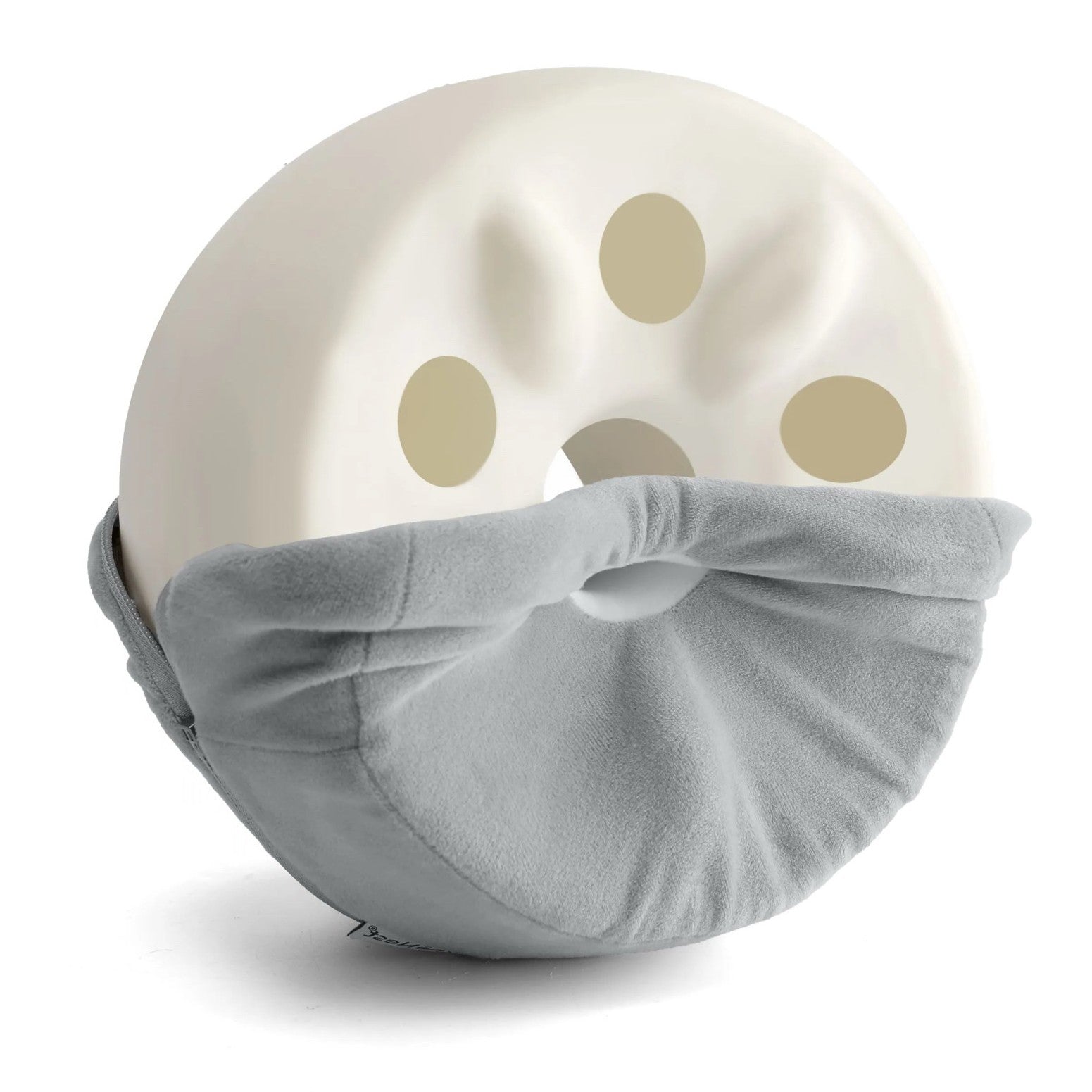
Our side sleeper pillow uses a patent-pending knee-docking shape, pressure-relieving memory foam, and five built-in airflow channels. The removable, washable cover makes daily care easy. If you sleep warm, the Brisa Cooling version adds a cool-touch cover.
Not sure where to start? Compare the full range in our best knee pillows for side sleepers guide and find the fit that suits your body and sleep style.
Slipping is usually a fit problem, not a willpower problem. If your pillow keeps escaping, the answer is a shape that holds your knees without a squeeze.
Frequently Asked Questions
How do I keep a knee pillow from sliding out while I sleep?
Start with fit: a pillow that is too thin or too thick forces your leg muscles to grip it, and that tension moves it out of place. Needing to tighten your leg muscles to hold it is a sign to rethink its height or fit. Choose a contoured shape that cradles both knees, keep your knees slightly bent, and check that your top knee rests level with your hip rather than rolling forward.
Where should a knee pillow sit between my legs?
Place it between the knees, not down at the ankles or up against the thighs. Your knees should rest in the pillow's contours with a small gap between them, and your top knee should sit roughly level with your hip so your pelvis stays square. If the pillow rides up toward your thighs or drops toward your shins, its height or shape is probably wrong for your leg proportions.
Can a knee pillow be secured with a strap?
Some knee pillows include a strap or hook-and-loop closure to help hold them in place. A strap can help if you move around at night, but it should never be tight enough that you have to clench your leg to keep the pillow positioned. A contoured pillow that supports both knees without a strap is an alternative worth trying, especially if straps feel restrictive.
How long should I sleep with a knee pillow each night?
Use it for the whole night if it stays comfortable and you wake without needing to reposition it. Give yourself a week or two to adjust to the new position, since your body may need time to adapt. If you notice numbness, tingling, or the need to constantly tighten your leg muscles, stop and reassess the pillow's height and shape rather than pushing through.
