

Table of Contents
- What Orthopedic Pillows for Hip Pain Actually Do
- How to Sleep with Hip Pain: Positioning and Support Strategies
- Key Features to Look For in Hip-Pain Relief Pillows
- Comparison of Orthopedic Pillow Options
- 1. knēNest Side Sleeper Alignment Pillow
- 2. knēNest Brisa Cooling Side Sleeper Alignment Pillow
- 3. Complete Alignment Systems: knēNest + Orb Bundles
- Frequently Asked Questions
Last Updated: October 2, 2026
What Orthopedic Pillows for Hip Pain Actually Do
Orthopedic pillows for hip pain address a specific problem: when you sleep on your side, your knees and hips naturally collapse toward each other, creating pressure points that disrupt sleep. They work by providing structured support between the knees, maintaining proper spacing and alignment throughout the night.
By keeping your knees separated, these pillows reduce stress on your hip joints and lower back, especially important for side sleepers. When alignment improves, pressure points ease and sleep quality deepens.
Not all orthopedic pillows deliver the same results. A generic pillow will flatten and shift; a purpose-built orthopedic design maintains its contour for consistent relief.
knēNest® orthopedic pillows are designed for side sleepers seeking hip pain relief. The patent-pending knee-docking shape cradles both knees naturally, reducing the need for leg straps or constant repositioning. This guide covers what matters when choosing an orthopedic pillow for hip pain.

knēNest Side Sleeper Alignment Pillow – Patent Pending
How to Sleep with Hip Pain: Positioning and Support Strategies
The most effective position for hip pain relief is true side sleeping with proper spinal alignment, your spine, hips, and neck forming a relatively straight line. Most people don't achieve this naturally, which is why positioning support matters.
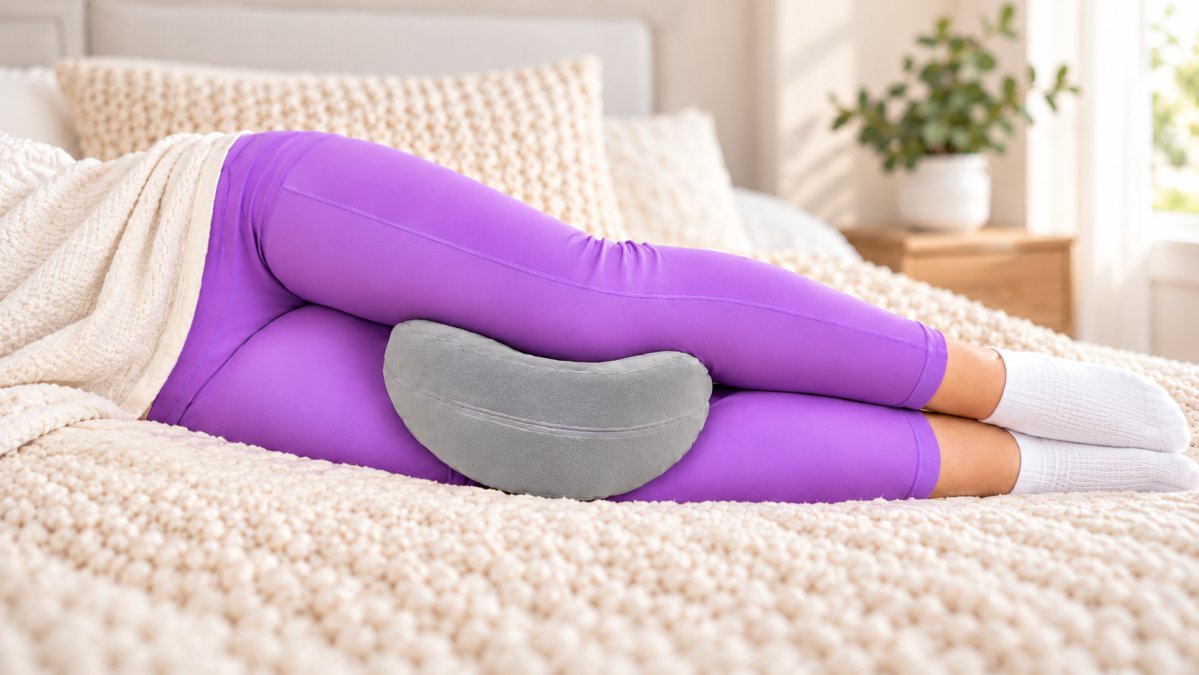
Best Positions for Relief
Identify your dominant side and sleep on your less painful side first to assess your current alignment. Notice where your knees naturally want to touch and where your hip feels pressure.
With an orthopedic pillow in place, your knees should rest in a gentle cradle rather than pressing directly against each other. Your top hip should align with your shoulder, and your lower back should feel supported, not twisted.
Use your orthopedic pillow consistently for at least two weeks before evaluating results. Your body may need time to adjust to a new sleeping position. Use knēNest consistently and position both knees in the contoured cradle for the intended support.
Memory Foam vs. Gel-Infused Options
Memory foam is the standard material for orthopedic pillows because it conforms to your body's shape while providing support. The trade-off is that it retains heat, which can make some sleepers uncomfortable during warm months.
Gel-infused memory foam embeds cooling gel particles that dissipate heat more effectively than traditional foam. For hot sleepers or anyone in a warm climate, gel-infused options provide the same support with better temperature regulation.
If you sleep cool or in a cool bedroom, standard memory foam is sufficient. If you wake up hot, gel-infused is worth the upgrade.
Contoured Designs vs. Standard Pillows
A contoured orthopedic pillow has a specific shape engineered to support knee and hip positioning. The knēNest® design features a patent-pending knee-docking shape that naturally cradles both knees without pressure points, preventing the pillow from rolling or flattening.
Standard pillows lack this targeted shaping and flatten under pressure. Contoured designs resist compression and maintain their shape for consistent support.
A contoured orthopedic pillow with high-density memory foam typically maintains its shape for 2-3 years of nightly use, versus 6-12 months for standard pillows, making contoured designs more cost-effective over time.
Key Features to Look For in Hip-Pain Relief Pillows
When evaluating orthopedic pillows for hip pain, focus on material quality, shape design, breathability, and durability.
Feature |
What It Does |
Why It Matters |
|---|---|---|
Patent-pending contoured shape |
Cradles knees naturally without relying on straps |
Maintains alignment and prevents pillow shift throughout the night |
High-density memory foam |
Provides firm support while conforming to knee contours |
Resists compression and maintains shape longer than standard foam |
Airflow channels |
Ventilation pathways reduce heat buildup |
Improves breathability and comfort for longer sleep sessions |
Hypoallergenic material |
Chemical-free foam reduces allergen exposure |
Better for sensitive sleepers and those with respiratory concerns |
Removable, washable cover |
Easy maintenance without damaging foam |
Extends pillow lifespan and maintains hygiene |
Spinal Alignment and Pelvic Tilt Support
Proper pelvic tilt is the foundation of hip pain relief. An orthopedic pillow maintains neutral pelvic position by supporting your knees at the correct height and spacing.
A well-designed orthopedic pillow provides just enough height to maintain neutral alignment without overcorrection.
Proper alignment reduces pressure on your spine, which is why many users report improvements in overall back pain after switching to an orthopedic pillow.
knēNest Side Sleeper Alignment Pillow – Patent Pending →
Pressure Point Relief and Breathability
In side sleeping, the main pressure points are the outer hip, knee, and ankle. An orthopedic pillow addresses the knee and hip pressure points directly through its contoured shape and supportive foam.
Quality orthopedic pillows include ventilation channels or breathable fabric covers that allow air circulation, keeping the pillow fresher and preventing heat buildup that disrupts sleep.
Comparison of Orthopedic Pillow Options
The orthopedic pillow market offers several approaches to hip pain relief, with key differences in material technology, cooling features, and whether the pillow is standalone or part of an alignment system.
Below is a comparison of the leading options for side sleepers seeking hip pain relief:
Product |
Starting Price |
Key Features |
Best For |
|---|---|---|---|
knēNest Side Sleeper Alignment Pillow |
$59 |
Patent-pending knee-docking design, airflow channels, high-density memory foam |
Side sleepers with hip or knee pain |
$69 |
Cooling performance cover, knee-docking design, breathable fabric blend |
Hot sleepers or warm climates |
|
knēNest + Orb Spine-to-Toe Alignment System |
$99 |
Coordinated knee and ankle support, patent-pending designs, bundle savings |
Comprehensive alignment from spine to feet |
knēNest Brisa + Orb Spine-to-Toe Alignment System |
$109 |
Cooling knee pillow + ankle support, bundle savings, limited availability |
Hot sleepers seeking full-body alignment |
1. knēNest Side Sleeper Alignment Pillow
The knēNest® Side Sleeper Alignment Pillow is our core offering for side sleepers with hip pain. It features a patent-pending knee-docking shape designed to cradle both knees naturally without relying on leg straps or tight elastic bands. The contoured design maintains consistent support throughout the night, preventing the pillow from flattening or shifting.


The pillow is constructed from hypoallergenic, high-density memory foam with five built-in airflow channels that improve ventilation. This combination provides firm support while maintaining breathability, so you get pressure relief without excessive heat buildup.
Pros:
- Patent-pending knee-docking shape prevents pillow shift
- High-density memory foam resists compression
- Built-in airflow channels improve breathability
- Hypoallergenic material suitable for sensitive sleepers
- Removable, washable cover for easy care
- Affordable entry point for orthopedic support
Cons:
- Standard memory foam may retain heat for hot sleepers
- Requires 2-3 weeks for full body adaptation
- Best results when used consistently
2. knēNest Brisa Cooling Side Sleeper Alignment Pillow
The knēNest® Brisa Cooling Side Sleeper Alignment Pillow combines the same patent-pending knee-docking support with a cool-touch performance cover designed for hot sleepers. The breathable fabric blend actively helps release heat and promote airflow, addressing one of the main complaints about traditional memory foam pillows.
Pros:
- Cool-touch performance cover reduces heat buildup
- Same patent-pending knee-docking support as standard model
- Breathable fabric blend improves airflow
- Hypoallergenic and chemical-free
- Removable, washable cover
- Ideal for warm sleepers or hot climates
Cons:
- Higher cost than standard memory foam option
- Cooling benefit is moderate, not extreme
- Requires consistent use for adaptation
3. Complete Alignment Systems: knēNest + Orb Bundles
For side sleepers seeking comprehensive alignment support from knee to ankle, knēNest® offers two bundle options that pair the knee pillow with the knēNest® Orb ankle and foot alignment pillow. These systems coordinate support across multiple pressure points, creating what we call "spine-to-toe alignment."
System Pros:
- Coordinated support from knees through ankles
- Bundle pricing saves money versus individual purchases
- Addresses the complete alignment chain
- Both products feature patent-pending contoured designs
- Hypoallergenic materials throughout
- Removable, washable covers
System Cons:
- Requires adjustment to sleeping with two support pillows
- Takes longer for full body adaptation (3-4 weeks typical)
- Limited availability on bundle options
Frequently Asked Questions
Do orthopedic pillows for hip pain really work?
Orthopedic pillows are designed to support spinal alignment and reduce pressure point stress during sleep. Their effectiveness depends on consistent use and proper positioning. Many side sleepers report improved comfort and reduced tossing when using a contoured knee pillow that maintains hip and knee spacing throughout the night. Results vary by individual, so a trial period helps determine if a specific pillow suits your needs.
How do I know if a knee pillow for side sleepers is the right choice for me?
A knee pillow is ideal if you experience knee-on-knee pressure, hip discomfort, or poor spinal alignment when side sleeping. Look for contoured designs that cradle both knees without requiring tight straps, built-in airflow channels for breathability, and pressure-relieving memory foam that maintains shape. If you frequently adjust your position or wake with stiffness, a dedicated knee pillow may address these issues better than a standard pillow.
What materials work best for hip pain relief pillows?
High-density memory foam is effective for hip pain because it provides support while conforming to your body's contours, promoting proper weight distribution. Some options include cooling covers or gel-infused materials if you tend to sleep warm. Hypoallergenic materials are beneficial if you have sensitivities. The key is finding a pillow that maintains its shape throughout the night while cushioning pressure points at the hips, knees, and ankles.
Should I use a knee pillow if I'm recovering from knee or back surgery?
If your physical therapist recommends elevation or alignment support during recovery, a contoured knee pillow designed for side sleepers can help maintain proper positioning. However, always follow your healthcare provider's specific guidance for post-surgical sleep positioning. A pillow with a patent-pending contoured design can support natural alignment from your spine through your legs without requiring adjustment throughout the night.