

Last Updated: October 30, 2026
Quick Summary
A knee pillow is worth it for side sleepers whose top knee keeps dropping onto the bottom one, twisting the hips and lower back. A contoured knee pillow holds the legs apart in a steadier position than a flat standard pillow that slides or flattens overnight. Judge it by whether your hips feel level and your knees stay separated in the morning.
- A flat or shapeless cushion tends to slide, flatten, or sit in the wrong place during the night.
- Match the pillow's height to the level where your hips feel straight, not twisted.
- Dense foam that springs back quickly keeps its shape and needs less readjusting.
- Give a new knee position a week or two before judging whether the pillow works.
- Choose a ventilated or cool-touch cover if you tend to wake up warm between the knees.
Table of Contents
- Why Side Sleepers Look for a Knee Pillow Alternative
- What to Look for in a Knee Pillow for Side Sleepers
- knēNest Side Sleeper Alignment Knee Pillow
- knēNest Brisa Cooling Side Sleeper Alignment Pillow
- Adding Ankle Support with the knēNest Orb
- How to Use a Knee Pillow for Side Sleeping
- Choosing Your knēNest Next Step
- Frequently Asked Questions
Why Side Sleepers Look for a Knee Pillow Alternative
Side sleeping is the most common sleep position, and it often comes with a familiar problem: the top knee drops onto the bottom one, twisting the hips and pulling on the lower back.

The knēNest® pillows are designed around this exact problem, so the answer below reflects what a dedicated side-sleeper product is meant to do, not a promise of medical results.
What to Look for in a Knee Pillow for Side Sleepers
Most buying guides for side sleepers stop at "contoured shape, dense foam, breathable cover." That checklist is fine as a starting point, but it does not tell you whether a given pillow will actually fit your body. The criteria below go a step further and connect each feature to the side-sleeper problem it is meant to solve, so you can judge a knee pillow against your own proportions rather than against a marketing photo.
1. Shape that separates the knees, and holds the gap
A knee pillow only helps if it keeps the top knee from sliding forward and down onto the bottom one. Look for a contoured, docking-style shape with a defined cradle rather than a flat rectangle. The cradle should be deep enough that the top knee settles into it instead of rolling off. A flat or shapeless cushion is the exact failure mode most side sleepers are trying to escape when they replace a folded standard pillow.
2. Fit by body size and shoulder width
This is the criterion most guides skip, and it matters more than any single material choice. Side-sleeper fit is driven by how much space your hips and shoulders create when you lie on your side:
- Narrower shoulders and smaller frames tend to need a lower-profile cushion between the knees; an overly tall pillow can push the top leg up and rotate the hips.
- Broader shoulders and larger frames often need a fuller, taller cushion to keep the top knee from dropping past the bottom one.
- Firmer mattresses let the hips sink less, so the gap between the knees stays closer to its standing width; softer mattresses let the hips sink more, which can widen or shift that gap.
A practical test: lie on your side on your own mattress, stack a folded towel between your knees, and note the height at which your hips feel level rather than twisted. That height is your target loft. A knee pillow that sits noticeably above or below it will feel like it is fighting your hips, no matter how good the foam is.
3. Foam that holds its form through the night
Dense foam keeps its support instead of collapsing under the top leg's weight. The thing to watch for is shape recovery, a pillow that stays compressed after you shift position will need constant readjusting. When you compare models, press the cushion flat and see how quickly it springs back; slow recovery usually signals a softer fill that will flatten faster over months of use.
4. Ventilation and heat retention
Skin-on-skin contact between the knees traps heat, so airflow matters. Look for channels, perforations, or a breathable cover rather than a solid block of foam wrapped in non-breathable fabric. If you run warm at night, a cool-touch or performance cover is worth prioritizing over a lower price.
5. A cover you can actually clean
A removable, washable cover makes everyday care easier and extends the useful life of the pillow. Check how the cover attaches, a zip that is easy to remove and re-fit beats a snug slipcover you dread washing.
6. Stable placement
A pillow that stays put frees you from readjusting it every few hours. Contoured shapes and textured or grippy covers help; a smooth, rounded cushion tends to migrate.
7. Durability and shape retention over time
It is an important factor, because cheap knee pillows often lose their shape over time. Ask how the foam is expected to hold up, whether the cover is replaceable, and what the care routine is. A pillow that keeps its cradle shape for years is a better value than one that feels great for a month and then flattens.
When you are ready to compare, the knēNest Side Sleeper Alignment Knee Pillow is built around a contoured knee-docking shape, memory foam, airflow channels, and a removable, washable cover.

The article breaks the buying decision into seven criteria, each tied to a side-sleeper problem:
| Criterion | What to check | Why it matters |
|---|---|---|
| Shape that separates the knees | Deep contoured cradle | Stops the top knee sliding onto the bottom one |
| Fit by body size | Height matched to hip level | Too tall or too low twists the hips |
| Foam support | Quick shape recovery | Prevents flattening and constant readjusting |
| Ventilation | Channels or breathable cover | Reduces heat trapped between the knees |
| Cover | Removable and washable | Makes everyday care easier |
| Stable placement | Contoured shape or grippy cover | Keeps the pillow from migrating overnight |
| Durability | Lasting shape retention | Cheap pillows lose their shape over time |
knēNest Side Sleeper Alignment Knee Pillow
The knēNest Side Sleeper Alignment Knee Pillow is built specifically for side sleepers. Its patent-pending knee-docking shape is designed to reduce knee-on-knee pressure and help both knees settle into a supported position.
At $59.00, it is the lower-priced knee pillow in the knēNest lineup. It suits side sleepers who want a dedicated shape rather than a standard pillow repurposed for their legs.
knēNest Brisa Cooling Side Sleeper Alignment Pillow
If you tend to run warm at night, the knēNest Brisa Cooling Side Sleeper Alignment Pillow is the alternative to consider. It keeps the same patent-pending knee-docking design as the original, paired with a cool-touch performance cover.
knēNest Brisa Cooling Side Sleeper Alignment Pillow – Patent Pending →
It is priced at $69.00. Choose the Brisa over the standard model when temperature is the main concern. If you prefer the standard model's feel, the original is available at a lower price.
Adding Ankle Support with the knēNest Orb
Side-sleeping alignment does not stop at the knees. The knēNest Orb Ankle & Foot Alignment Pillow uses a patent-pending contoured design to cushion the ankles and help the feet settle into a supported position.

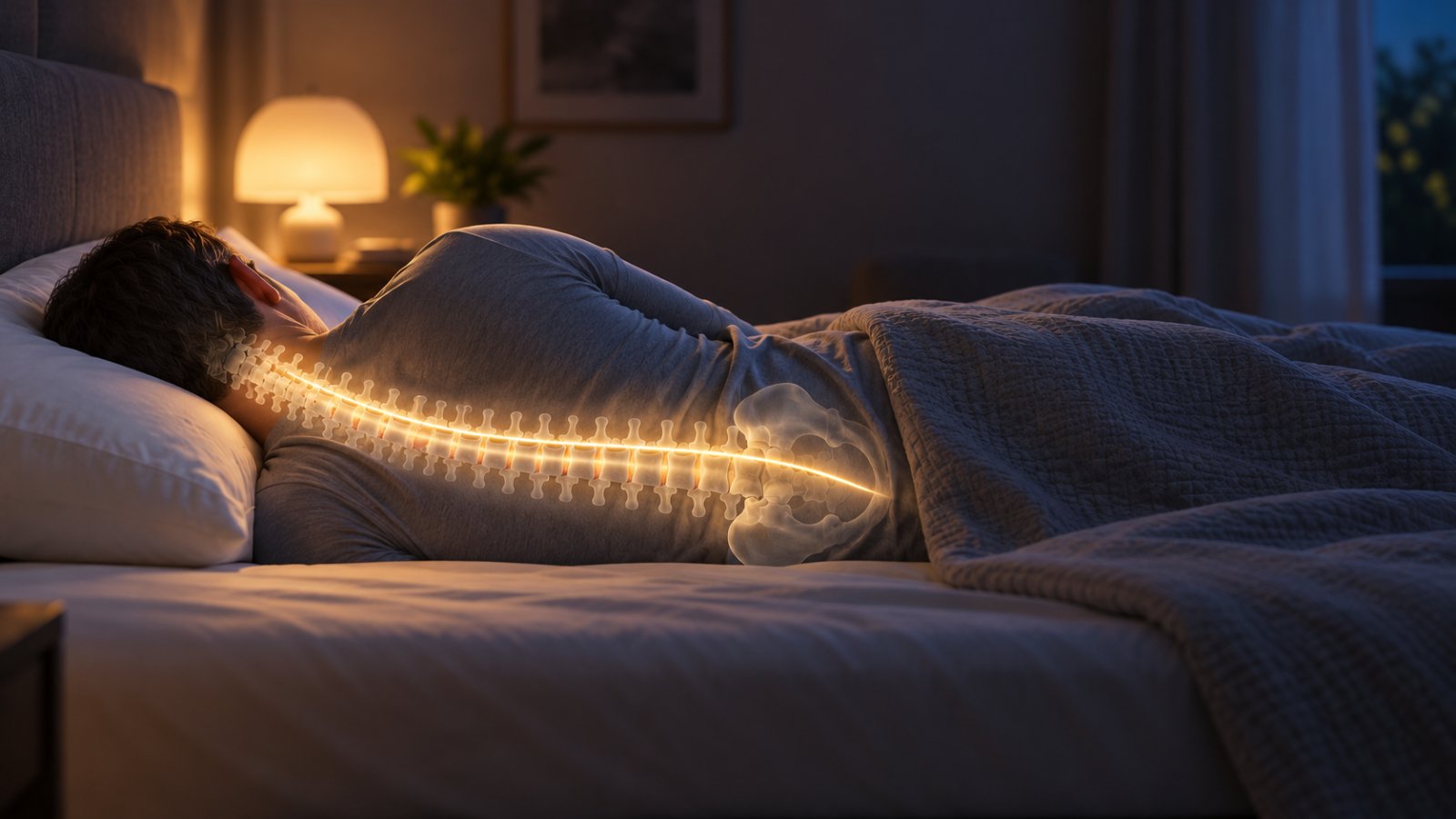
For a full spine-to-toe approach, the knēNest + Orb Spine-to-Toe Alignment System pairs the original knee pillow with the Orb for $99.00, against a combined value of $128.

Choose the knee pillow alone if your main issue is leg positioning. Add the Orb or pick a bundle if you also want the ankles and feet supported.
How to Use a Knee Pillow for Side Sleeping
Placement plays an important role in how a knee pillow works for you. The steps below go beyond "put it between your knees" and give you a way to test whether the pillow is actually doing its job for your body.
Step 1: Find your neutral starting position
Lie on your side in your usual position, on your own mattress, and bring the pillow between your knees. Before you settle in, notice your hips: they should feel level, not rotated forward or back. If the top hip feels like it is being pushed up, the pillow is too tall for you; if the top knee drops past the bottom one, it is too low.
Step 2: Seat the top knee in the cradle
Let the top knee rest in the contoured cradle so the two knees are separated rather than stacked. The goal is a steady gap that keeps the legs parallel, not a wide splay. A common mistake is placing the pillow too high (near the thighs) or too low (near the calves); start with it sitting snugly between the knees, then adjust in small steps.
Step 3: Check your spine line
With the pillow in place, run a hand along your side from hip to shoulder. You want a roughly straight line, not a curve at the waist. If your lower back feels twisted, the pillow height or position is off, adjust before you fall asleep rather than toughing it out.
Step 4: Give it a week or two
A new position can feel unfamiliar at first, and it may take a week or two for the body to adjust to a different knee gap. Judge the pillow on how your hips and lower back feel in the morning, not on the first night.
Step 5: Troubleshoot the common failure modes
- Pillow slides out during the night. Check that the cover has some grip and that the cradle is seated, not perched. A pillow that migrates is usually too smooth or too tall.
- Top knee still drops. The pillow is too low-profile for your frame; try a fuller cushion or add a thin layer under it to test the height.
- Hips feel pushed forward. The pillow is too tall; a lower-profile option or a softer mattress pairing may suit you better.
Step 6: Check the fit each morning
If the pillow has shifted overnight, reposition it before bed the next night and note whether the same drift happens. Repeated drift is a signal that the shape or height is not matching your sleep position.
If you want a dedicated shape rather than a repurposed standard pillow, the knēNest Side Sleeper Alignment Knee Pillow is designed around this placement: a contoured knee-docking cradle, memory foam, and five airflow channels for ventilation between the knees.
Choosing Your knēNest Next Step
A knee pillow is worth considering if your main problem is knee-on-knee pressure while side sleeping and a standard pillow keeps failing you.
For a broader look at knee pillows for side sleepers before you decide, read our guide, Best Knee Pillows for Side Sleepers: 2026 Guide. When you are ready, explore the full knēNest range and pick the model that fits your sleep.
Frequently Asked Questions
What is a good alternative to the Everlasting Comfort knee pillow?
Several knēNest options are built specifically for side sleepers. The knēNest Side Sleeper Alignment Knee Pillow uses a patent-pending knee-docking shape with pressure-relieving memory foam and five airflow channels. The knēNest Brisa adds a cool-touch performance cover for sleepers who run warm. Both have removable, washable covers. Comparing fill feel, cover, and shape against your current pillow is the most reliable way to decide which fits how you sleep.
What should side sleepers look for in a knee pillow?
Look for a contoured shape that keeps the knees separated and settled without a tight strap, supportive foam that holds its shape through the night, and a cover you can remove and wash. Breathability matters if you sleep warm. A focused design made for side sleeping usually positions the legs more predictably than a standard pillow pushed between the knees.
How do you use a knee pillow while sleeping on your side?
Lie on your side and place the knee pillow between your knees so both knees rest in the contoured cradle. Keep your top leg resting on the pillow rather than letting it drop forward, and keep your hips and spine stacked. Your body may need a few nights to adjust to a new sleeping position, so use it consistently before judging the fit.
What is the difference between a knee pillow and a leg positioner pillow?
A knee pillow is shaped to cradle the knees specifically, which is the main point of contact for side sleepers. A broader leg positioner supports more of the leg length. knēNest knee pillows focus on knee-on-knee pressure and alignment, and the knēNest Orb extends that support down to the ankles and feet when you want coverage below the knee.
