

Table of Contents
- Why Side Sleepers Search for Coop Sleep Goods Alternatives
- Quick Comparison: Key Features and Pricing
- Best Pillows for Side Sleepers: Your Options
- Adjustable-Fill Pillow Alternatives: Customizing Your Comfort
- Support, Alignment, and Pressure Relief: What Matters Most
- Pillow Trial and Return Policy: Your Risk-Free Window
- How to Choose the Right Alternative for Your Sleep Style
- Frequently Asked Questions
Last Updated: October 16, 2026
Why Side Sleepers Search for Coop Sleep Goods Alternatives
Side sleeping is the most common position, but it comes with a challenge: your knees press together throughout the night, which can disrupt sleep and strain your hips and lower back. A standard pillow between the knees, or nothing at all, often misses the targeted support that makes a difference.
A Coop Sleep Goods alternative doesn't mean settling for less, it means finding a solution tailored to your body. Whether you're recovering from surgery, managing chronic discomfort, or simply tired of waking up stiff, the right pillow can improve your sleep quality.
At knēNest®, we focus on one core principle: proper knee separation and spinal alignment reduce pressure points and support deeper, more restorative sleep. Most generic pillows miss that nuanced support.
Below, we'll walk through your best alternatives, what each delivers, and how to pick the one that fits your sleep style.
Quick Comparison: Key Features and Pricing
Product |
Type |
Key Feature |
Price |
|---|---|---|---|
Knee Pillow |
Patent-pending knee-docking design with airflow channels |
$59.00 |
|
knēNest Brisa Cooling Side Sleeper Pillow |
Knee Pillow |
Cooling cover with breathable fabric blend |
$69.00 |
knēNest Aligné Ergonomic Bamboo Silk Pillow |
Head & Neck Pillow |
Dual-height design for multiple sleep positions |
$69.00 |
knēNest + Orb Spine-to-Toe System |
Bundle |
Knee and ankle alignment from spine to feet |
$99.00 |
knēNest Brisa + Orb Spine-to-Toe System |
Bundle |
Cooling knee pillow plus ankle support |
$109.00 |
The choice depends on where you need support most: a dedicated knee pillow for focused knee relief, or a bundle system for coordinated alignment from hips through ankles.

Best Pillows for Side Sleepers: Your Options
Side sleepers need horizontal spinal support, knee separation, and ankle cushioning to prevent internal rotation, needs a pillow designed for another position often fails to meet.
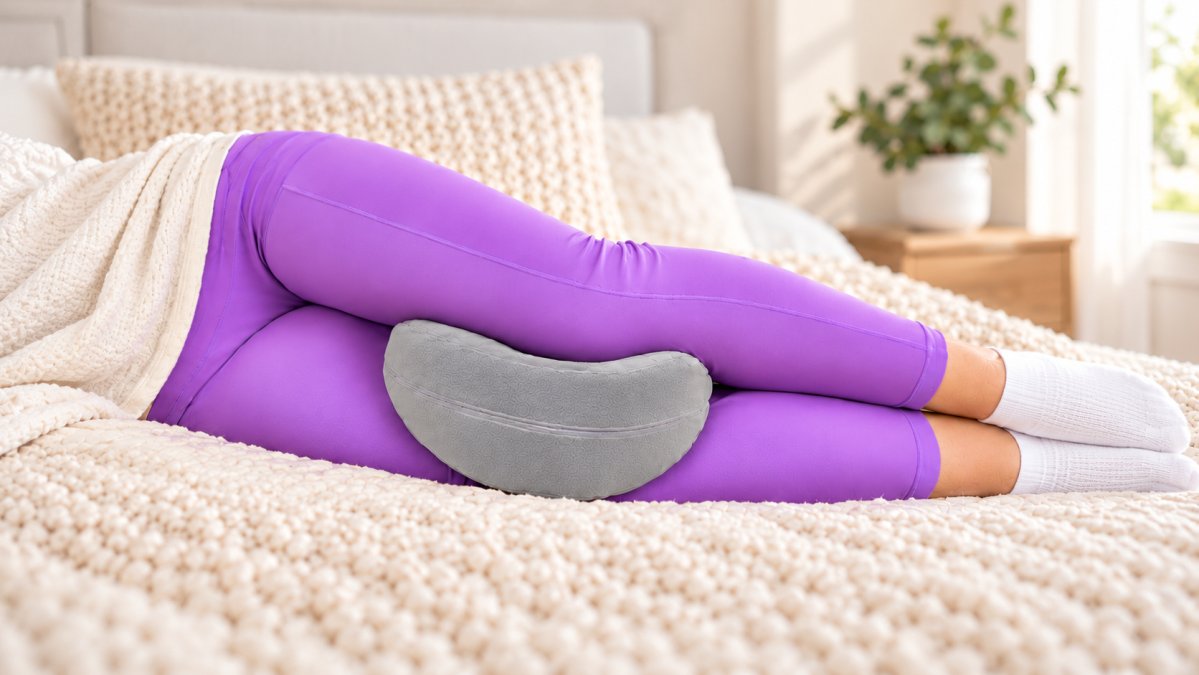
The knēNest Side Sleeper Alignment Knee Pillow uses a patent-pending knee-docking shape that cradles both knees without a leg strap. The contoured design lets your knees settle naturally, reducing knee-on-knee pressure, while built-in airflow channels improve breathability. At $59.00, it's the most direct solution if knee comfort is your main concern.
For sleepers who run hot, the knēNest Brisa Cooling Side Sleeper Alignment Pillow ($69.00) adds a cool-touch performance cover while keeping the same patent-pending support structure and contoured knee docking.

If you need support across your entire lower body, the knēNest + Orb Spine-to-Toe Alignment System ($99.00) pairs a knee pillow with the knēNest Orb ankle support pillow, extending alignment from spine through feet, valuable if you wake with ankle or foot discomfort.
Knee Pillow for Side Sleeping: Targeted Knee Support
A knee pillow sits between your knees while you side sleep. Its job is simple but critical: prevent your top knee from collapsing inward, which would twist your spine and hip alignment.
Most generic pillows fail here because they compress too quickly or shift during the night. A proper knee pillow maintains its shape and height, keeping your knees at the right distance apart. The knēNest design uses memory foam that resists flattening while staying responsive to your contours.
The patent-pending knee-docking feature is where the difference emerges: instead of a flat surface, a contoured cradle your knees settle into, so you don't need a strap or constant adjustment. Built-in airflow channels help prevent the heat buildup that causes restless sleep.
Head and Neck Support: Multi-Position Comfort
Not every side sleeper needs only knee support, some need head and neck cushioning too, especially if they switch positions during the night.
The knēNest Aligné Ergonomic Bamboo Silk Cooling Pillow ($69.00) takes a different approach: a dual-height design that supports your head and neck while your shoulders settle comfortably. The breathable bamboo silk cover reduces friction, and the pillow works for side, back, and stomach sleepers, ideal if you're not a pure side sleeper.
The contoured shape encourages proper neck alignment.
Adjustable-Fill Pillow Alternatives: Customizing Your Comfort
Coop Sleep Goods built its reputation on shredded-fill pillows you can unzip and adjust.
Shredded memory foam (adjustable fill). The classic Coop-style construction: unzip the inner liner, add or remove shredded foam, and re-fluff. The upside is genuine customization, you can dial in loft for your shoulder width and preferred firmness.
Solid memory foam. A single molded piece rather than loose shreds. It holds its shape without re-fluffing and doesn't migrate during sleep, which is why contoured knee pillows often use it. The trade-off is zero adjustability, you get the loft and firmness the manufacturer chose.
Latex. Made from natural or blended rubber, latex is springy and resilient rather than slow-rebound like memory foam. It holds loft longer than shredded foam and sleeps cooler than solid memory foam thanks to its open-cell structure.
Down-alternative and fiberfill. Polyester fiber clusters mimic down's softness without the allergens. They're light, compressible, and inexpensive, but flatten fastest of any construction and need replacing sooner. For knee support, fiberfill rarely holds enough height through the night to keep the top knee from dropping inward.
Buckwheat and hull fill. Natural hulls shift like sand, so the pillow molds to your shape and stays put once settled. Buckwheat is firm, supportive, and cool, but heavy, noisy, and not for sleepers who want a soft surface.
Where does knēNest® fit? Our knee pillow uses solid memory foam rather than adjustable fill, a deliberate choice, since a contoured, fixed-shape cushion holds its loft and position through the night without re-fluffing, which matters when the job is keeping your knees separated and your hips stacked.
knēNest Aligné Ergonomic Bamboo Silk Cooling Pillow →
If adjustability is non-negotiable, a shredded-fill pillow is the right category, just budget for periodic re-fluffing and a shorter useful life. If you'd rather not think about your pillow again after unboxing, solid foam or latex is the more hands-off path.
Support, Alignment, and Pressure Relief: What Matters Most
Pressure relief and spinal alignment are the two metrics that actually matter for sleep quality. Generic pillows often sacrifice one for the other.
Pressure relief means the pillow cushions your knees without hard spots that dig in. Memory foam distributes your weight across its surface rather than creating pressure points, and the knēNest design uses high-density memory foam that resists bottoming out.
Spinal alignment means your spine stays neutral from neck through lower back. Without proper knee support, your top leg drops inward and twists your lower spine, misalignment that accumulates over weeks and months into stiffness and discomfort. A knee pillow that maintains height and doesn't shift prevents this twist.
The knēNest patent-pending knee-docking design addresses alignment directly: your knees settle into the contoured shape, keeping them at the proper distance and preventing the inward collapse that misaligns your spine.
Pillow Trial and Return Policy: Your Risk-Free Window
Buying a pillow without testing it is a gamble. What feels comfortable in a store for 30 seconds might feel wrong after eight hours of sleep.
knēNest offers a 60-night comfort trial, giving you two full months to evaluate the pillow in your own bed and return it if it doesn't deliver the support you need. That's long enough to get past the adjustment phase, your body typically needs 5-7 nights to adapt, and still have time to decide.
Return policies vary: some competitors offer shorter trial windows or require you to pay return shipping. A 60-night trial removes the financial risk from your decision.
How to Choose the Right Alternative for Your Sleep Style
Most Coop-alternative roundups hand you a list and wish you luck. A better approach is to work backward from how you actually sleep. Use the framework below to narrow the field before you buy.
Step 1: Confirm your dominant sleep position.
- Side sleeper, most of the night. Prioritize a pillow that maintains knee separation and keeps your hips stacked. A contoured knee pillow is the most direct fit.
- Combination sleeper (side, back, stomach). Look for a pillow that supports multiple positions, a dual-height head and neck pillow, or a compact knee pillow you can move aside when you roll onto your back.
- Back sleeper who occasionally rolls to the side. A low-profile knee pillow works; a tall one will push your hips out of alignment when you're on your back.
Step 3: Decide how much adjustability you want. Shredded-fill pillows let you add or remove fill; solid foam and latex do not.
Step 4: Factor in temperature. If you wake up warm, look for breathable covers, airflow channels, or open-cell constructions like latex.
Step 5: Consider material sensitivities. If you react to latex, down, or certain foams, check the material list before buying. Certifications indicate a foam or fabric has met specific testing standards, treat them as a material-safety signal, not a health claim.
Step 6: Think about durability and upkeep. Shredded fill compacts and needs re-fluffing; solid foam can develop a body impression over years; latex tends to hold loft longest.
Step 7: Choose single-point or full-lower-body support. A knee pillow alone addresses the most common side-sleeper complaint. If you also wake with ankle or foot discomfort, a coordinated system supporting knees and ankles together keeps your lower body aligned from hips to feet.
Step 8: Use the trial period as your real test. No framework replaces sleeping on the pillow. Your body needs roughly a week to adapt to a new shape, so give any pillow at least seven consecutive nights before judging it.
If you've worked through these steps and knee separation is your primary need, the knēNest Side Sleeper Alignment Knee Pillow is built around that single job: a compact, contoured cushion that keeps your knees apart and your hips stacked through the night.
Frequently Asked Questions
What makes a good Coop Sleep Goods alternative for side sleepers?
A solid alternative should address the core needs of side sleepers: knee-on-knee pressure relief, spinal alignment, and neck support. Look for options with contoured designs that cradle your knees, memory foam that maintains shape through the night, and breathable materials for temperature control. The knēNest Side Sleeper Alignment Knee Pillow uses a patent-pending knee-docking shape specifically engineered for this, with built-in airflow channels to support comfortable positioning of knees, hips, and spine.
Are adjustable-fill pillow alternatives really better than fixed designs?
Adjustable-fill pillows offer flexibility to customize firmness and loft, which works well for some sleepers. However, contoured, fixed-design alternatives like the knēNest can be equally effective—sometimes more so—because they're engineered with your sleep position in mind. A knee pillow designed specifically for side sleepers eliminates guesswork; the contoured shape naturally guides your knees into proper alignment without needing adjustment. The choice depends on whether you prefer fine-tuning comfort or having a purpose-built solution.
How important is a pillow trial period when switching from Coop Sleep Goods?
A trial period is crucial because your body needs time to adjust to a new sleeping position and support level. Your muscles and joints may feel different for the first week or two. A 60-night comfort trial, like knēNest offers, gives you a full two months to experience the benefits consistently and confirm the pillow supports your alignment and reduces discomfort. This eliminates the risk of purchasing based on first impressions alone.
Can a knee pillow for side sleeping actually reduce back pain?
A knee pillow supports better spinal alignment by reducing strain on your lower back when side sleeping. Placing proper support between your knees keeps your spine neutral and prevents your top leg from pulling your pelvis out of alignment. While a pillow provides comfort and positioning support, individual results vary based on the underlying cause of discomfort. Consistent use of a well-designed knee pillow, positioned correctly with both knees in the contoured cradle, helps maintain the aligned posture your body needs for restorative sleep.