

Table of Contents
- What to Look for in an Ergonomic Pillow for Hip Recovery
- knēNest Side Sleeper Alignment Knee Pillow: Contoured Support for Daily Comfort
- knēNest Brisa Cooling Pillow: Temperature Control for Longer Sleep Sessions
- Hip Abduction Pillow: Proper Leg Alignment After Hip Replacement
- Sleeping Positions After Hip Replacement: How Pillow Placement Supports Recovery
- Pillow Between Knees After Hip Replacement: Positioning for Joint Protection
- Complete Alignment Systems: Knee-to-Toe Support for Side Sleepers
- How to Choose the Right Pillow for Your Recovery Stage
- Frequently Asked Questions
Last Updated: October 9, 2026
What to Look for in an Ergonomic Pillow for Hip Recovery
Finding the best ergonomic pillow for hip recovery starts with understanding what supports your joints at night. Side sleepers recovering from hip surgery or managing alignment issues need more than any pillow between the knees, the right one reduces pressure, maintains spinal alignment, and keeps hips stable.
When you sleep on your side, your top knee falls inward toward the bottom knee, creating pressure on the hip joint and twisting your spine. A purpose-built knee pillow cradles both knees in a contoured shape, keeping them separated and level with your hips.

Contoured Support and Knee Separation
Contoured support is the foundation of effective hip recovery pillows. Unlike a standard pillow folded between your knees, a contoured design cradles your knees without requiring you to squeeze your legs together to hold it in place.
The best ergonomic pillow for hip recovery uses an hourglass or dumbbell shape that settles your knees into place without sliding. This prevents the nighttime repositioning that disrupts sleep and aggravates hip discomfort. Pillows relying on leg straps or compression tend to feel restrictive and shift anyway.
Memory Foam Density and Pressure Relief
Memory foam density affects how long a pillow holds its shape and how much pressure relief it provides. High-density foam resists compression better than standard foam, so it won't flatten after a few weeks.
Too soft, and your knees sink unevenly, creating pressure points; too firm, and it feels like a brick. Medium-firm memory foam supports your knees while conforming to their contours and retains its shape through repeated compression.
Pressure relief matters because your knees bear weight all night. Memory foam that contours to your knees spreads that weight across a larger surface area instead of concentrating it on bony points, reducing the aching many side sleepers feel by morning.
Airflow and Temperature Regulation
Side sleepers often experience heat buildup between the knees, which disrupts sleep. A pillow with ventilation channels or a breathable cover helps release heat and maintain a neutral temperature overnight.
Some ergonomic pillows mold airflow channels into the foam; others use performance fabrics that wick moisture. Temperature regulation matters especially during surgery recovery, when sensitivity to heat and cold may be heightened.
knēNest Side Sleeper Alignment Knee Pillow: Contoured Support for Daily Comfort
The knēNest Side Sleeper Alignment Knee Pillow is purpose-built for side sleepers seeking the best ergonomic pillow for hip recovery and daily comfort. Its patent-pending knee-docking design cradles both knees naturally, eliminating the need for leg straps or compression that can shift during the night.
Its contoured shape settles your knees into a supported position that keeps your hips level with your spine, reducing the twisting and pressure behind morning stiffness. The pressure-relieving memory foam holds its shape through repeated compression for consistent support night after night.
Five built-in airflow channels improve ventilation through the foam, reducing the heat buildup that disrupts side sleepers. The removable, washable cover keeps it clean without damaging the foam core.
The knēNest Side Sleeper Alignment Knee Pillow offers the core features for effective hip recovery. Use it consistently, positioning both knees fully in the contoured cradle.
knēNest Brisa Cooling Pillow: Temperature Control for Longer Sleep Sessions
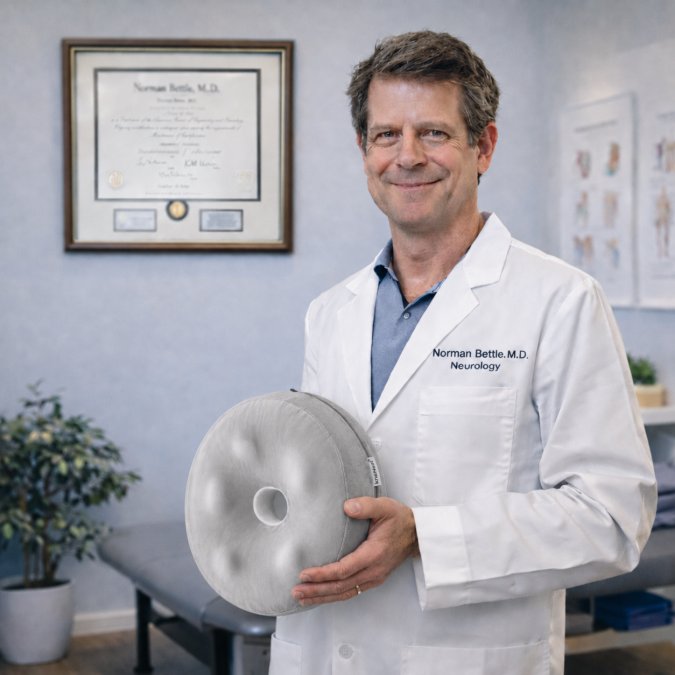
For side sleepers who run warm or struggle with heat buildup between the knees, the knēNest Brisa Cooling Pillow combines the same patent-pending contoured support with a cool-touch performance cover. This is an ergonomic pillow for hip recovery when temperature regulation is your priority.

The Brisa's breathable fabric blend releases heat rather than trapping it. Combined with built-in airflow channels, it creates a cooler microclimate that helps you sleep deeper without waking from overheating. The knee-docking shape provides the same support as the original knēNest pillow, maintaining hip and spinal alignment all night.
The Brisa costs $10 more than the standard knēNest pillow. The performance cover is also removable and washable.
Hip Abduction Pillow: Proper Leg Alignment After Hip Replacement
In the immediate post-surgery phase, your surgeon may recommend specific positioning for daytime rest. As you return to normal sleeping, a contoured knee pillow like knēNest becomes more practical at night.
Once past the acute phase, a purpose-built knee pillow for side sleepers offers comfort and practicality long term.
Sleeping Positions After Hip Replacement: How Pillow Placement Supports Recovery
Sleeping position and pillow placement affect your hip joint's stability and healing after surgery. Side sleeping is generally safe past the immediate post-operative phase, but proper support is essential.
During early healing, lie on your non-surgical side when possible and place a pillow between your knees to keep your top leg from falling inward. Your top knee should rest level with your hip. A contoured knee pillow maintains this alignment automatically, while a standard pillow often lets your top leg rotate inward and strain the hip.
Back sleeping requires different support: place a pillow under your knees to reduce hip flexion and keep your spine neutral. It works well for some but can feel restrictive for habitual side sleepers.
Pillow Between Knees After Hip Replacement: Positioning for Joint Protection
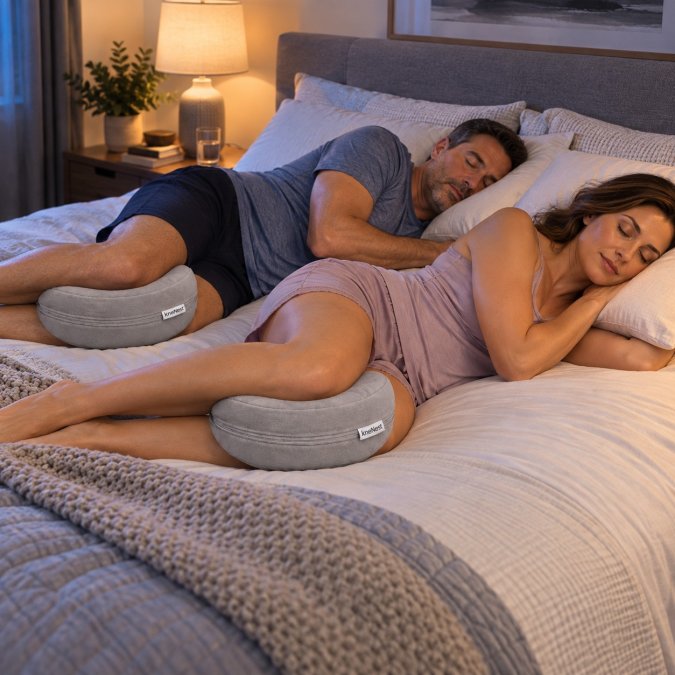
A pillow between your knees after hip replacement serves one critical function: preventing your top leg from falling inward and stressing the repaired hip joint. It acts as a spacer that maintains alignment without conscious effort during sleep.
knēNest Side Sleeper Alignment Knee Pillow – Patent Pending →
The best ergonomic pillow for hip recovery here is one that doesn't slip or compress unevenly. A contoured knee pillow that settles naturally into place can be more effective than a standard pillow, which shifts as you move.
Position the pillow so both knees rest fully in the contoured area, cradled, not balanced on top. This keeps it in place and provides consistent support through the night. If you're adjusting it repeatedly, it's likely too soft or the wrong shape for your body.
Complete Alignment Systems: Knee-to-Toe Support for Side Sleepers
For side-sleeping support beyond the knees, alignment systems pair a knee pillow with an ankle and foot pillow, addressing the full chain of alignment from spine through legs and feet.
The knēNest + Orb Spine-to-Toe Alignment System ($99) bundles the knēNest Side Sleeper Alignment Knee Pillow with the knēNest Orb Ankle & Foot Alignment Pillow. The Orb uses the same patent-pending contoured design to support your ankles and feet, preventing them from pressing together and creating pressure points.
For those prioritizing temperature control, the knēNest Brisa + Orb Spine-to-Toe Alignment System ($109) pairs the cooling knee pillow with the ankle support pillow. This complete system maintains alignment from your knees through your feet while managing heat throughout the night.

Complete alignment systems are valuable during hip recovery because they reduce positional adjustments. When knees, ankles, and feet are all supported, you're less likely to shift into positions that strain a healing hip joint. Bundle pricing also saves money versus buying each pillow separately.
How to Choose the Right Pillow for Your Recovery Stage
Your recovery stage determines which pillow features matter most, early post-surgery needs differ from long-term side-sleeping comfort.
Immediate post-surgery (first 4-8 weeks): Follow your surgeon's recommendations first; a hip abduction pillow may be prescribed for daytime positioning. At night, use a knee pillow that maintains alignment without shifting, the knēNest Side Sleeper Alignment Knee Pillow's contoured design prevents slipping when your hip is most vulnerable.
Mid-recovery (weeks 8-16): As swelling decreases and mobility improves, comfort matters more. If heat sensitivity affects your sleep, the knēNest Brisa Cooling Pillow's performance cover helps you sleep deeper. A complete alignment system becomes practical if ankle or foot discomfort arises from compensating for hip limitations.
Long-term management (beyond 16 weeks): Once past acute recovery, the best ergonomic pillow for hip recovery maintains alignment while supporting your preferred sleeping style. For consistent side sleepers, a contoured knee pillow prevents the pressure and misalignment that can trigger chronic hip discomfort. Temperature control matters if you sleep warm.
| Recovery Stage | Priority Features | Recommended Pillow | Why It Works |
|---|---|---|---|
| Immediate post-surgery | Non-slip design, consistent support | knēNest Side Sleeper Alignment | Prevents shifting that stresses healing joint |
| Mid-recovery | Comfort, heat management | knēNest Brisa Cooling | Maintains alignment while regulating temperature |
| Long-term management | Durability, daily comfort | knēNest Side Sleeper or Brisa | Prevents chronic misalignment and pressure |
| Complete support | Head-to-toe alignment | knēNest + Orb System | Reduces positional adjustments throughout night |
An adjustment period is normal. Use your pillow every night rather than alternating.
According to research on sleep positioning and joint health, proper spinal alignment during sleep reduces morning stiffness and supports long-term joint function. The American Academy of Sleep Medicine emphasizes that side sleeping is a common position for adults, and supportive pillows that maintain neutral spine alignment contribute to better sleep quality.
For those recovering from orthopedic procedures, the American Physical Therapy Association notes that proper positioning during sleep is an important component of recovery protocols. A pillow that maintains consistent alignment reduces compensatory movements that can delay healing.
knēNest® has designed its pillows specifically for side sleepers managing hip, knee, and back concerns. Our patent-pending contoured support and airflow channels address alignment and comfort challenges.
Sleep Foundation research on pillow selection confirms that pillow firmness, contour, and material consistency directly affect sleep quality and joint comfort for side sleepers. A pillow that maintains its shape and supports proper alignment outperforms pillows that compress unevenly or shift during the night.
Choose the best ergonomic pillow for hip recovery based on your needs: For acute post-surgery recovery, prioritize a non-slip contoured design that maintains alignment. If you sleep warm or wake from heat, the cooling cover becomes essential.
Start with the knēNest Side Sleeper Alignment Knee Pillow ($59) for core contoured support, or upgrade to the knēNest Brisa Cooling Pillow ($69) if temperature regulation matters. Both include a 60-night comfort trial. Position both knees fully in the contoured cradle and use consistently.
Frequently Asked Questions
What kind of pillow is best for hip pain?
A contoured knee pillow designed for side sleepers provides targeted support between the knees, reducing pressure on the hip joint. Look for one with memory foam that maintains its shape throughout the night and features that promote natural hip and spinal alignment. A pillow with airflow channels helps prevent overheating during extended sleep sessions, which is especially important for those managing hip discomfort.
What is a hip abduction pillow for?
A knee pillow supports proper leg alignment by keeping the knees and hips separated during sleep. This positioning can reduce internal rotation of the hip joint and help prevent the legs from rolling inward. It can be useful for maintaining the joint in a stable, supported position without requiring conscious effort.
How long should I sleep with a pillow between my knees after hip replacement surgery?
Follow your surgeon's or physical therapist's specific guidance, as recovery timelines vary by procedure and individual healing. Using supportive positioning throughout the initial recovery phase and beyond can promote comfort and alignment. Consistent use can help support long-term joint health.
Can a pillow between your knees help keep your hips more aligned while sleeping?
Yes. A knee pillow for side sleepers maintains proper hip alignment by preventing the top leg from rolling inward and crossing the body's midline. This neutral positioning reduces stress on the hip joint, supports spinal alignment from the hips through the shoulders, and reduces the need for your body to compensate with awkward positioning. Over time, consistent alignment during sleep can improve overall comfort and reduce morning stiffness.
What should I look for in an ergonomic pillow for hip recovery?
Prioritize contoured support that cradles both knees without relying on tight straps, high-density memory foam that maintains shape through the night, and built-in airflow channels for temperature control. The pillow should be compact enough to stay in place without shifting, have a removable washable cover for hygiene, and feel supportive rather than flattening under pressure. A 60-night trial period allows you to assess whether the pillow meets your comfort and alignment needs.